



Key Factors to Consider When Buying Steel Buckles, Locks and Seals
Introduction
Steel buckles, locks and seals are important components in stainless steel strapping systems. They are widely used for cable bundling, pole mounting, pipe securing, sign installation, telecommunications, solar equipment, and industrial applications.
Although these components are relatively small, their quality can directly affect the reliability of the entire strapping system. An unsuitable buckle, lock, or seal may cause poor strap retention, installation difficulties, corrosion, or premature fastening failure.
For this reason, buyers should evaluate more than just price when purchasing steel buckles, locks and seals. Material, dimensions, compatibility, strength, installation method, surface condition, and application environment should all be considered before placing an order.

Material and Stainless Steel Grade
Material is one of the first factors to evaluate when buying steel buckles, locks and seals. Different steel grades offer different levels of corrosion resistance and mechanical performance.
304 stainless steel is commonly used for general industrial, outdoor, and cable-management applications. It provides good corrosion resistance and mechanical strength while offering a balance between performance and cost.
316 stainless steel is often selected for more demanding environments. Its molybdenum content provides improved resistance to chloride-related corrosion, making it suitable for coastal, marine, chemical, and other harsh environments.
Galvanized steel may be suitable for applications where moderate corrosion resistance is sufficient. However, when long-term outdoor durability is important, stainless steel is often a more appropriate choice.
Buyers should select the material according to the actual operating environment rather than automatically choosing the lowest-cost option.
Compatibility with Stainless Steel Strapping
Steel buckles, locks and seals should be compatible with the stainless steel strap they are designed to secure.
Important specifications include strap width, thickness, material, and construction. A fastening component that is too small may not properly accommodate the strap, while an oversized component may not provide the intended holding performance.
For example, a buckle designed for a narrow stainless steel band should not be assumed to work effectively with a wider or thicker strap.
Before purchasing, buyers should compare the fastening component’s recommended strap dimensions with the specifications of the stainless steel strapping being used.
Size and Dimensions
Correct dimensions are essential for reliable installation.
Common dimensions to check include the buckle or seal width, length, thickness, and the compatible strap width. Even when two products appear similar, small differences in dimensions can affect installation and fastening performance.
For projects involving large quantities of strapping, maintaining consistent dimensions is especially important because workers may be installing hundreds or thousands of fastening points.
Buyers should request detailed dimensional drawings or product specifications from the supplier when the application requires precise compatibility.
Holding Strength and Load Requirements
The fastening component should provide sufficient holding strength for the intended application.
Light-duty cable bundling does not necessarily require the same fastening performance as heavy pipes, industrial equipment, or infrastructure installations. The weight of the secured object, vibration, wind loading, tension, and other mechanical forces should be considered.
However, it is important to remember that the performance of a strapping system does not depend on the buckle, lock, or seal alone. The strength of the stainless steel strap and the quality of installation also contribute to the final holding performance.
For demanding applications, buyers should ask suppliers for available mechanical performance data and recommended applications.
Corrosion Resistance
Corrosion resistance is particularly important when steel buckles, locks and seals are used outdoors.
Cable installations, signs, poles, telecommunications equipment, solar systems, and industrial equipment may be exposed to rain, humidity, salt spray, chemicals, and temperature changes.
A fastening component that performs well indoors may not have the same service life in a coastal or chemically aggressive environment.
When buying components for outdoor or harsh environments, consider the stainless steel grade, surface condition, and expected exposure. For marine or high-chloride environments, 316 stainless steel may be worth considering.
Buckle, Lock or Seal Design
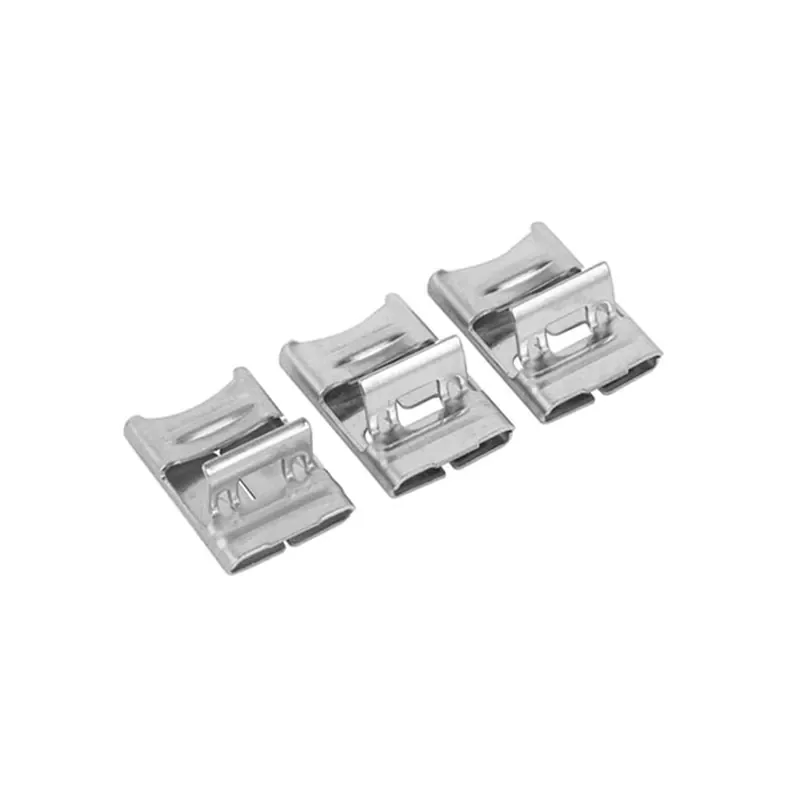
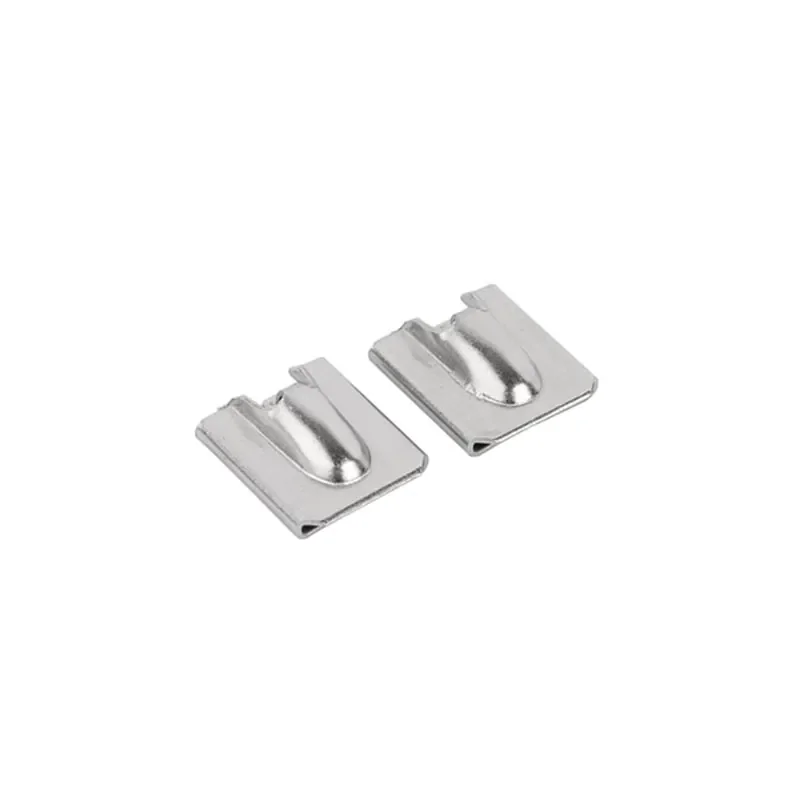
Not all fastening components use the same installation method. Steel buckles, locks, and seals can have different structural designs depending on how the strap is secured.
Some designs rely on folding or friction, while others require clamping or crimping. The choice should match the installation process and the required fastening performance.
A simple design may be appropriate for standard applications, while a more robust locking structure may be preferable where vibration or mechanical stress is expected.
Buyers should understand how the component is installed before selecting a product, especially when the products will be used by different installation teams.
Installation Tools and Efficiency
The fastening component should be compatible with the tools used for stainless steel strapping installation.
Depending on the product design, installation may involve a tensioning tool, crimping tool, sealing tool, or another specialized device.
Tool compatibility affects both fastening quality and installation efficiency. A component that requires a tool unavailable to the installation team can create unnecessary delays and inconsistent results.
For large projects, buyers should consider not only the price of the buckles, locks, or seals but also the overall installation process.
Surface Finish and Product Quality
The surface condition of steel buckles, locks and seals can influence both appearance and performance.
A quality product should have a relatively consistent surface without obvious burrs, cracks, sharp defects, or deformation. Poorly finished edges can make handling more difficult and may damage the strap during installation.
For stainless steel components, surface quality can also affect resistance to corrosion and the appearance of finished installations.
When purchasing in bulk, buyers should ask about the supplier’s production and inspection procedures to ensure consistent product quality from batch to batch.
Manufacturing Tolerances
Manufacturing consistency is particularly important for steel buckles, locks and seals used in large-volume applications.
If dimensions vary significantly between batches, installers may encounter problems when feeding the strap through the component or applying tension.
Reliable manufacturers should have quality-control procedures covering raw materials, dimensions, forming, surface condition, and finished-product inspection.
For OEM or long-term purchasing programs, it can also be useful to establish agreed specifications and inspection standards before mass production.
Application Environment
The operating environment should always be considered before purchasing fastening components.
Indoor cable management may have relatively simple requirements. Outdoor telecommunications, solar, transportation, marine, chemical, and industrial applications can require much higher corrosion resistance and mechanical durability.
Factors such as humidity, salt exposure, temperature, chemicals, UV exposure, vibration, and mechanical load may all influence the appropriate product selection.
The better the supplier understands the actual application, the easier it is to select a suitable combination of strap and fastening component.
Quantity and Packaging
For B2B buyers, ordering quantity and packaging are also practical considerations.
Steel buckles, locks and seals are often purchased in bulk for manufacturing, construction, cable installation, or distribution. Packaging should protect the components from damage, contamination, and unnecessary deformation during transportation and storage.
Buyers should confirm the quantity per package, carton dimensions, labeling, and whether customized packaging is available when required.
For long-term projects, suppliers with stable production capacity can also help reduce the risk of supply interruptions.
Supplier Manufacturing Capability
Choosing the right supplier is just as important as choosing the right product.
A capable manufacturer should be able to provide consistent dimensions, stable material quality, reliable production capacity, and appropriate quality control. For customized products, the supplier should also have the engineering and tooling capabilities required to develop the requested design.
Buyers should evaluate factors such as manufacturing experience, production equipment, inspection procedures, material traceability, customization capabilities, and export experience.
For large or recurring orders, it is often better to establish a long-term relationship with a manufacturer that can maintain consistent product specifications rather than changing suppliers based solely on small price differences.
Price vs. Total Cost
Price is an important purchasing factor, but the lowest unit price does not always represent the lowest overall cost.
A cheaper fastening component may have inconsistent dimensions, poor corrosion resistance, lower mechanical performance, or installation problems. These issues can increase labor costs, replacement costs, and maintenance requirements.
A better approach is to consider the total cost of ownership, including product price, transportation, installation time, tool requirements, replacement frequency, and expected service life.
For demanding applications, investing in higher-quality stainless steel buckles, locks and seals may provide better long-term value.
How to Choose the Right Steel Buckles, Locks and Seals
A practical purchasing process can start with the following questions:
What type and size of stainless steel strap will be used?
What material and stainless steel grade are required?
What load and holding strength are needed?
Will the fastening system be used indoors or outdoors?
Is the installation exposed to salt, chemicals, moisture, or high temperatures?
What installation tools are available?
Are standard or customized dimensions required?
What quantity is needed?
Can the supplier provide consistent quality for future orders?
Answering these questions before purchasing can significantly reduce the risk of selecting incompatible or unsuitable fastening components.
Conclusion
Buying steel buckles, locks and seals requires more consideration than simply comparing product prices. Material grade, strap compatibility, dimensions, holding strength, corrosion resistance, design, installation method, surface quality, and supplier capabilities all influence the performance of the finished strapping system.
For general applications, 304 stainless steel may provide a practical balance of corrosion resistance and cost. For marine, coastal, chemical, or other demanding environments, 316 stainless steel may be a better choice.
Most importantly, the buckle, lock, or seal should be evaluated together with the stainless steel strap and installation tools. By selecting compatible components from a reliable manufacturer, buyers can achieve more consistent installation, better fastening performance, and longer service life.
FAQ
What should I consider when buying steel buckles, locks and seals?
The main factors include material, stainless steel grade, dimensions, strap compatibility, holding strength, corrosion resistance, installation method, surface quality, and supplier reliability.
Are 304 stainless steel buckles suitable for outdoor applications?
Yes. 304 stainless steel is suitable for many general outdoor applications. However, environments with high chloride or severe corrosion exposure may require 316 stainless steel.
When should I choose 316 stainless steel buckles and seals?
316 stainless steel is often considered for coastal, marine, chemical, and other environments where greater resistance to chloride-related corrosion is required.
How do I know whether a buckle is compatible with my stainless steel strap?
Check the buckle’s recommended strap width and thickness and compare them with the specifications of your stainless steel band. The manufacturer should provide compatibility information.
Does the buckle or seal affect the strength of the strapping system?
Yes. The fastening component is an important part of the complete system. Its design, material, dimensions, and installation method can influence the final holding performance.
Should I choose steel buckles based only on price?
No. Unit price should be evaluated together with material quality, durability, installation efficiency, service life, and supplier consistency. A low-cost component may result in higher costs if it fails or requires frequent replacement.