



High-Temperature Stainless Steel Zip Ties: Materials and Ratings Explained.
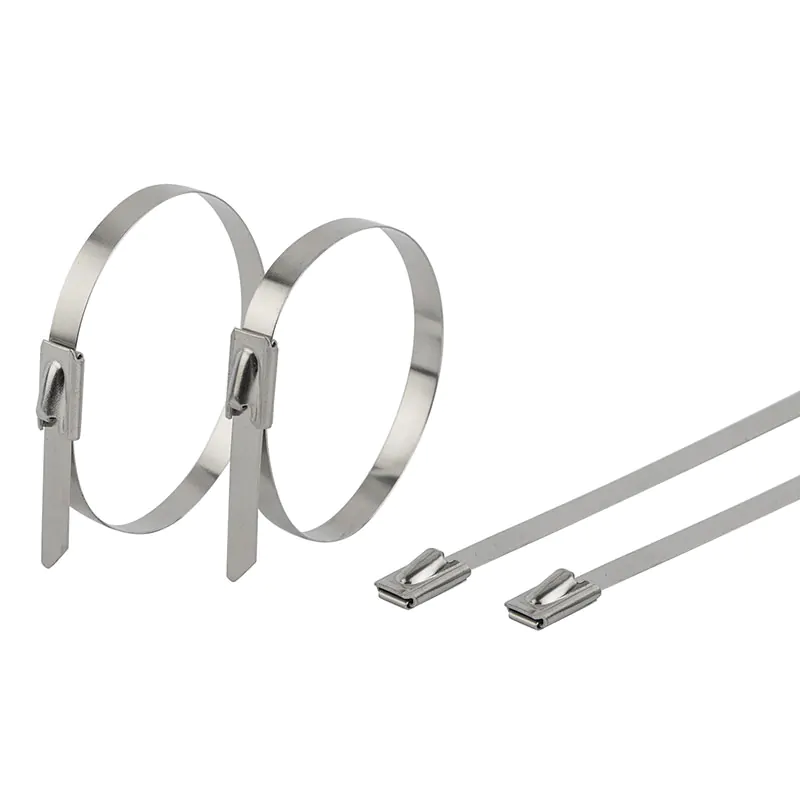
In demanding industrial environments, ordinary fastening solutions can fail catastrophically when temperatures rise. For securing cables, hoses, and components in furnaces, engine bays, exhaust systems, or industrial ovens, you need a solution engineered to withstand the heat. High-temperature stainless steel zip ties are designed for this exact purpose, but not all are created equal. Their performance hinges on the specific alloy used and its precise temperature rating. Using a standard stainless tie in a high-heat application risks losing tension, mechanical failure, and safety hazards. This guide will demystify the key materials—namely 304 and 316 stainless steel—and explain their temperature ratings and limits, empowering you to select the right tie for your most thermally challenging applications. Xinxing specializes in manufacturing robust high-temperature stainless steel ties that deliver reliable performance when it matters most.
Why Standard Ties Fail and the Need for High-Temp Specific Designs
Standard nylon zip ties begin to degrade and lose strength at temperatures as low as 85°C (185°F). Even general-purpose stainless steel ties, while more resilient, have limits dictated by their alloy composition and the design of their locking mechanism. In high-temperature environments, materials can undergo several failure modes: loss of tensile strength and elasticity, causing the tie to loosen; oxidation and scaling, which weakens the metal; and embrittlement, leading to sudden fracture. A high-temperature stainless steel zip tie is specifically engineered to resist these effects. This involves selecting alloys with superior high-temperature stability and often employing a locking mechanism design that maintains its grip even as the metal expands and contracts with thermal cycling.

Core Materials: 304 vs. 316 Stainless Steel for Heat Resistance
The two most common stainless steels for high-temperature cable ties are AISI 304 and AISI 316. Their performance under heat differs significantly due to their chemical makeup.
304 Stainless Steel is an 18/8 austenitic stainless steel (18% chromium, 8% nickel). It offers excellent oxidation resistance in intermittent service up to about 870°C (1600°F) and continuous service up to 815°C (1500°F). It is a cost-effective, all-purpose high-temperature alloy suitable for many applications like securing wiring in commercial oven interiors, heat treating lines, and high-temperature ducting. However, its weakness is susceptibility to “sensitization” (carbide precipitation) in the 425-870°C range, which can reduce corrosion resistance in certain environments.
316 Stainless Steel contains molybdenum (2-3%) in addition to chromium and nickel. This addition dramatically improves its resistance to corrosion and pitting, especially from chlorides and industrial solvents. More importantly for heat, it enhances high-temperature strength and stability. 316 offers superior creep strength—resistance to gradual deformation under stress at high temperatures. Its recommended maximum continuous service temperature is similar to 304, but it maintains its structural integrity and corrosion resistance better under cyclic heating and in aggressive atmospheres, making it the premium choice for extreme environments like marine engine rooms, chemical processing heat traces, or coastal industrial facilities.
Understanding Temperature Ratings and Key Performance Data
When selecting a high-temperature tie, you must distinguish between continuous service temperature and peak/Intermittent temperature.
-
Continuous Service Temperature: The maximum temperature at which the tie can reliably operate indefinitely without significant loss of mechanical properties (e.g., tensile strength). This is your primary design criterion. For Xinxing 304 ties, this is typically up to 700°C (1292°F), and for 316 ties, up to 800°C (1472°F), depending on the specific product series.
-
Peak/Intermittent Temperature: A higher temperature the tie can withstand for short, defined periods without immediate failure. This might be relevant for startup/shutdown cycles or process upsets.
Other critical data points include Tensile Strength (which will decrease as temperature increases—ask for high-temperature strength retention charts) and Thermal Expansion Coefficient. Stainless steel expands when heated; a quality high-temp tie’s lock is designed to accommodate this without slipping.
Material Comparison and Application Guide
The following table provides a clear comparison to guide your material selection based on temperature and environmental factors.
| Material / Property | 304 Stainless Steel Zip Ties | 316 Stainless Steel Zip Ties |
|---|---|---|
| Key Alloy Addition | Chromium-Nickel (18/8). | Chromium-Nickel-Molybdenum. |
| Max Continuous Service Temp | Up to ~700°C / 1292°F (Excellent for most high-heat applications). | Up to ~800°C / 1472°F (Superior for extreme heat). |
| Oxidation Resistance | Very Good. Forms a protective chromium oxide layer. | Excellent. Enhanced stability under prolonged heat. |
| Corrosion Resistance (General) | Good resistance to many oxidizers and organic chemicals. | Superior. Excellent resistance to chlorides, acids, and industrial solvents. |
| High-Temp Strength & Creep Resistance | Good. | Better. Maintains load-bearing capability better under sustained high heat and stress. |
| Best For Applications Like… | Industrial ovens, boiler rooms, exhaust system components (away from direct condensate), heat treatment lines. | Marine & offshore engine bays, chemical plant high-temperature piping, coastal power generation, highly corrosive fume environments. |
| Cost Consideration | More economical, offering a great balance of performance and value. | Higher cost, justified for the most extreme and corrosive thermal environments. |
How to Select the Right High-Temperature Tie for Your Application
Making the correct choice involves a systematic evaluation of your operating conditions:
-
Identify the Operational Temperature Profile: Determine the normal continuous operating temperature and the maximum possible peak temperature. Always choose a tie whose continuous rating exceeds your normal operating temperature for a safety margin.
-
Analyze the Ambient Environment: Is the location exposed to moisture, salt spray, chemical vapors, or acidic/alkaline condensates? In the presence of chlorides or aggressive chemicals, especially when hot, 316 stainless is the necessary choice to prevent premature corrosion failure.
-
Assess the Mechanical Load: Consider the weight and vibration of the bundle. Remember that tensile strength decreases with temperature. For heavy bundles in high-heat areas, you may need a wider or thicker-gauge tie and must consult the manufacturer’s high-temperature derating data.
-
Consider Thermal Cycling: If the application involves frequent heating and cooling cycles, the tie will repeatedly expand and contract. Both 304 and 316 perform well, but 316’s enhanced creep resistance makes it more durable for severe cycling.
Conclusion
Selecting the correct high-temperature stainless steel zip tie is a critical engineering decision that impacts safety and reliability. For most high-heat applications up to ~700°C, 304 stainless ties offer robust performance. For extreme temperatures, corrosive atmospheres, or where maximum long-term integrity is essential, 316 stainless is the definitive choice. Never compromise on specifications for thermal environments. For guaranteed performance and material integrity, trust Xinxing’s rated high-temperature stainless steel cable ties. Contact our technical team today with your application details for a precise product recommendation.
FAQ
Q: Can these ties be used in direct flame contact?
A: No. They are designed for high ambient temperature environments, not direct flame impingement. Direct flame can locally exceed the material’s limits and cause rapid failure.
Q: Will the tie’s color change at high temperatures?
A: Yes. A phenomenon called “temper coloring” will occur. 304/316 steel will develop a rainbow hue (gold, blue, purple) and eventually a dark oxide scale. This is normal and does not necessarily indicate failure.
Q: How does thermal expansion affect installation?
A: You should install the tie with a firm hand-tightness. Over-tightening can stress the lock. The design accounts for expansion, but allowing a slight tolerance is good practice for cyclic applications.
Q: Are high-temperature stainless ties also chemical-resistant?
A: Yes, particularly 316 stainless, which offers excellent resistance to a wide range of chemicals, especially at elevated temperatures where chemical reactivity increases.
Q: Why choose Xinxing for high-temperature applications?
A: Xinxing provides clearly rated products with verified material certifications (e.g., 304, 316). Our ties are engineered for performance retention under heat, giving you reliable data for safe specification and long-term system integrity.