



What Are the Different Types of Stainless Steel Cable Ties?
Publish Time: Author: Site Editor Visit: 28
Introduction
If you’re in industrial or construction procurement, you know stainless steel cable ties are non-negotiable for securing cables, pipes, and components in harsh environments. But with diverse options tailored to specific scenarios, choosing the right one can be tricky. This guide breaks down 5 key types of stainless steel cable ties, their unique benefits, and how to pick the perfect fit—backed by real-world data and expert insights from XIXI.
Why Stainless Steel Cable Ties Outperform Other Options
Core Advantages That Matter for Procurement
Unlike plastic cable ties that crack under UV exposure, corrode in chemicals, or melt in extreme temperatures, stainless steel variants are engineered for durability in the toughest settings. Their key strengths include:
- Extreme Resistance: Withstand UV rays, saltwater, industrial chemicals, and temperature ranges from -40°C to 500°C (-40°F to 932°F).
- Superior Tensile Strength: Handle heavy-duty bundling needs that plastic ties can’t—critical for construction, oil & gas, and marine applications.
- Fire & Corrosion Safety: Meet industrial fire safety standards and resist rust, reducing replacement and maintenance costs long-term.
- Material Versatility: Available in grades like 304 (general use) and 316 (enhanced corrosion resistance for marine/chemical settings).
For a deeper dive into material science and industry standards, refer to Thomasnet’s comprehensive guide to stainless steel cable ties.
5 Key Types of Stainless Steel Cable Ties
1. Standard Stainless Steel Cable Ties
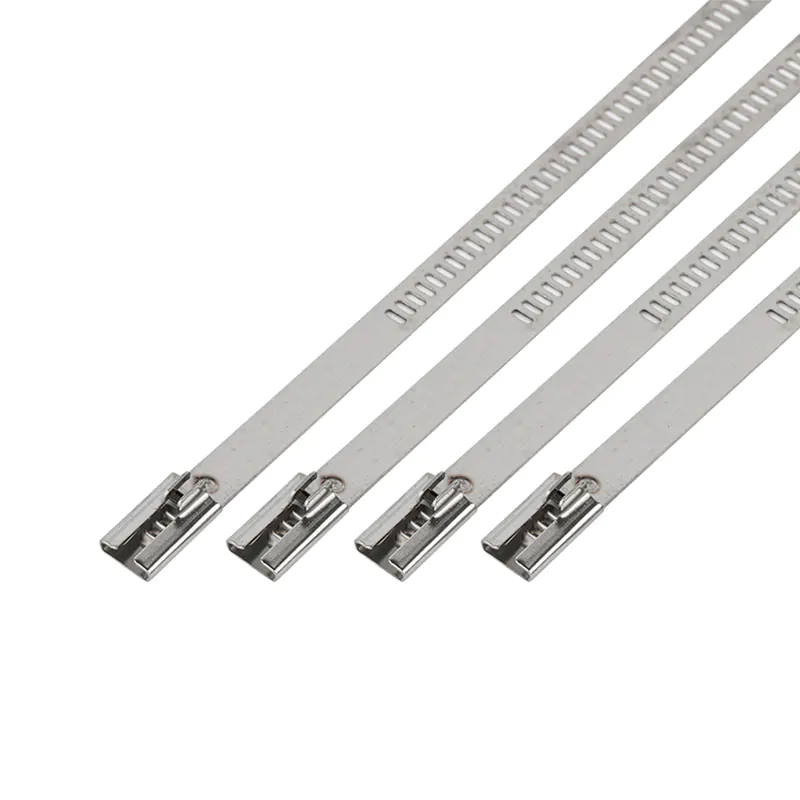
The workhorse of industrial bundling, standard ties feature a smooth band and reliable self-locking mechanism. They’re designed for general-purpose use where consistent performance and easy installation are priorities.
- Specs: Band widths from 4.6mm to 12.7mm; tensile strength 50–250 lbs.
- Ideal Applications: Electrical cabinet wiring, automotive harnesses, and light-duty marine bundling (with 316 grade).
- Installation: Compatible with basic hand tools or standard tensioning tools—no specialized equipment needed.
2. Serrated Stainless Steel Cable Ties
Serrated ties have sharp, evenly spaced teeth along the band that dig into bundled materials, preventing slippage in high-vibration or dynamic-load environments. They’re the top choice for applications where stability is non-negotiable.
- Specs: Band widths 4.6mm–12.7mm; tensile strength 75–300 lbs (higher than standard ties).
- Ideal Applications: Aerospace components, heavy machinery wiring, and marine engine compartments (where vibration is constant).
- Installation: Requires specialized tensioning tools to ensure the teeth engage properly without damaging the band.
3. Coated Stainless Steel Cable Ties
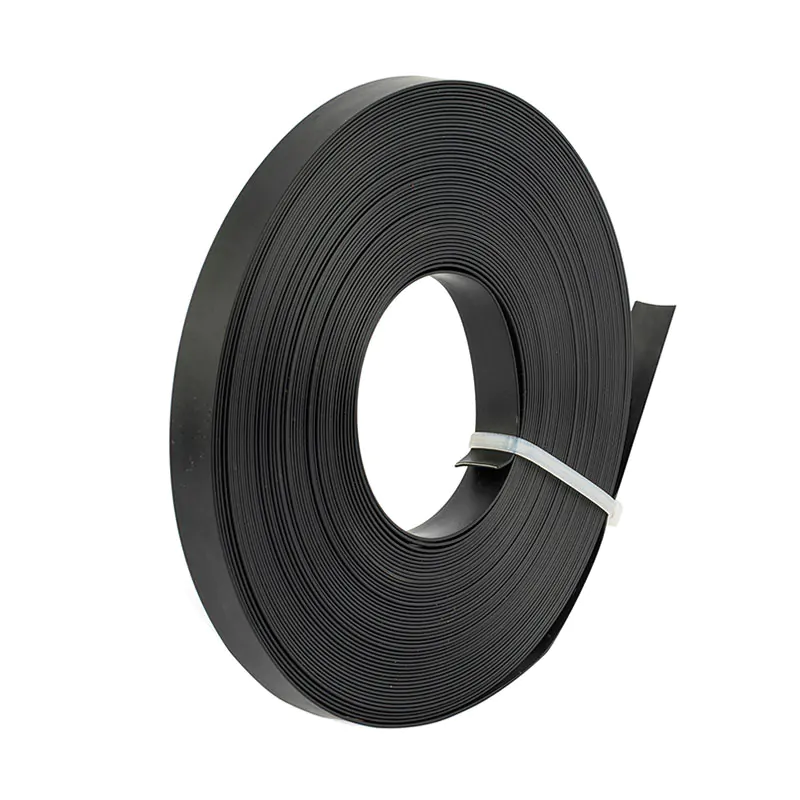
These ties feature a nylon or PVC coating over the stainless steel core, adding an extra layer of protection against abrasion, metal-to-metal contact, and electrical conductivity. They’re also color-coded for easy identification in complex systems.
- Specs: Band widths 4.6mm–12.7mm; tensile strength 50–250 lbs (matches standard ties).
- Ideal Applications: Food processing (prevents metal contamination), pharmaceutical facilities (easy sanitization), and sensitive electronics (electrical insulation).
- Key Benefit: The coating preserves sensitive surfaces while the stainless steel core maintains corrosion resistance.
4. Heavy-Duty Stainless Steel Cable Ties
Engineered for the most demanding industrial settings, heavy-duty ties have thicker bands (up to 19.0mm) and reinforced locking mechanisms to handle extreme tensile loads. They’re built to withstand harsh chemicals, saltwater, and heavy structural loads.
- Specs: Band widths 9.0mm–19.0mm; tensile strength 250–500+ lbs.
- Ideal Applications: Oil & gas pipeline bundling, construction site wiring, and mining equipment (where exposure to chemicals and heavy loads is common).
- Material Preference: Almost exclusively 316 stainless steel for maximum corrosion resistance.
5. Releasable Stainless Steel Cable Ties
Releasable ties feature a specialized tab or lever that allows for unlocking and reuse—perfect for temporary installations, prototyping, or maintenance where adjustments are frequent. They balance flexibility with reliable performance.
- Specs: Band widths 4.6mm–9.0mm; tensile strength 40–150 lbs (lower than permanent ties).
- Ideal Applications: Equipment testing, temporary construction setups, and maintenance/repair operations (where ties need to be removed and reinstalled).
- Cost Benefit: Eliminates the need for frequent replacement, reducing long-term procurement costs.
Stainless Steel Cable Tie Specifications Comparison
| Type | Band Width (mm) | Tensile Strength (lbs) | Coating Available | Typical Use Cases | Material Grade |
|---|---|---|---|---|---|
| Standard | 4.6 – 12.7 | 50 – 250 | No | General industrial, electrical, automotive | 304, 316 SS |
| Serrated | 4.6 – 12.7 | 75 – 300 | No | Aerospace, heavy machinery, marine (vibration-prone) | 304, 316 SS |
| Coated | 4.6 – 12.7 | 50 – 250 | Nylon, PVC | Food processing, pharma, sensitive electronics | 304, 316 SS |
| Heavy-Duty | 9.0 – 19.0 | 250 – 500+ | No | Oil & gas, construction, mining | 316 SS |
| Releasable | 4.6 – 9.0 | 40 – 150 | No | Temporary setups, maintenance, prototyping | 304 SS |
How to Choose the Right Stainless Steel Cable Tie
Selecting the perfect tie depends on 4 critical factors—use this framework to make data-driven procurement decisions:
- Environment: Marine/chemical settings → 316 grade; food/pharma → coated ties; high vibration → serrated ties.
- Tensile Load: Light-duty (50–150 lbs) → standard/releasable; heavy-duty (250+ lbs) → heavy-duty ties.
- Installation Permanence: Temporary adjustments → releasable; permanent bundling → standard/serrated/heavy-duty.
- Surface Sensitivity: Sensitive equipment/food contact → coated ties; rough surfaces → standard/serrated.
Conclusion
Choosing the right stainless steel cable tie isn’t just about durability—it’s about aligning the tie’s specs with your unique environment, load, and compliance needs. Whether you’re sourcing for a food processing plant, offshore rig, or aerospace facility, the right tie reduces costs, enhances safety, and minimizes downtime.
XIXI’s range of stainless steel cable ties—from coated food-grade options to 500+ lbs heavy-duty ties—are engineered for industrial procurement needs. Every product is tested to meet global standards, backed by real-world performance data.
Stainless Steel Cable Tie Selection GuideReady to streamline your cable tie procurement? Contact XIXI’s procurement experts today to get a customized quote.
Frequently Asked Questions (FAQs)
Q: What’s the difference between 304 and 316 stainless steel cable ties?
A: 316 stainless steel contains molybdenum, which provides 2–3x better corrosion resistance than 304—critical for marine, chemical, or coastal environments. 304 is ideal for general industrial use where corrosion exposure is low. Read our full 304 vs 316 comparison.
Q: Can stainless steel cable ties be reused?
A: Only releasable stainless steel cable ties are designed for reuse. Standard, serrated, and heavy-duty ties are permanent—attempting to reuse them will break the locking mechanism and reduce tensile strength.
Q: Are coated stainless steel cable ties suitable for outdoor use?
A: Yes—nylon/PVC coatings add UV resistance and abrasion protection, making coated ties ideal for outdoor electrical wiring, garden irrigation systems, or outdoor construction sites.
Q: What tools do I need to install stainless steel cable ties?
A: Standard and releasable ties work with basic hand tensioners. Serrated and heavy-duty ties require specialized stainless steel tensioning tools to ensure proper locking without damaging the band. Browse our recommended installation tools.
Q: How do serrated ties prevent slippage compared to standard ties?
A: Serrated ties have micro-teeth along the band that engage with the bundled material (cables, pipes) to create a “grip” that resists movement. Standard smooth ties rely on friction alone, which fails in high-vibration settings.