



The Engineering Behind Epoxy Coated Releasable Cable Tie Systems
Introduction
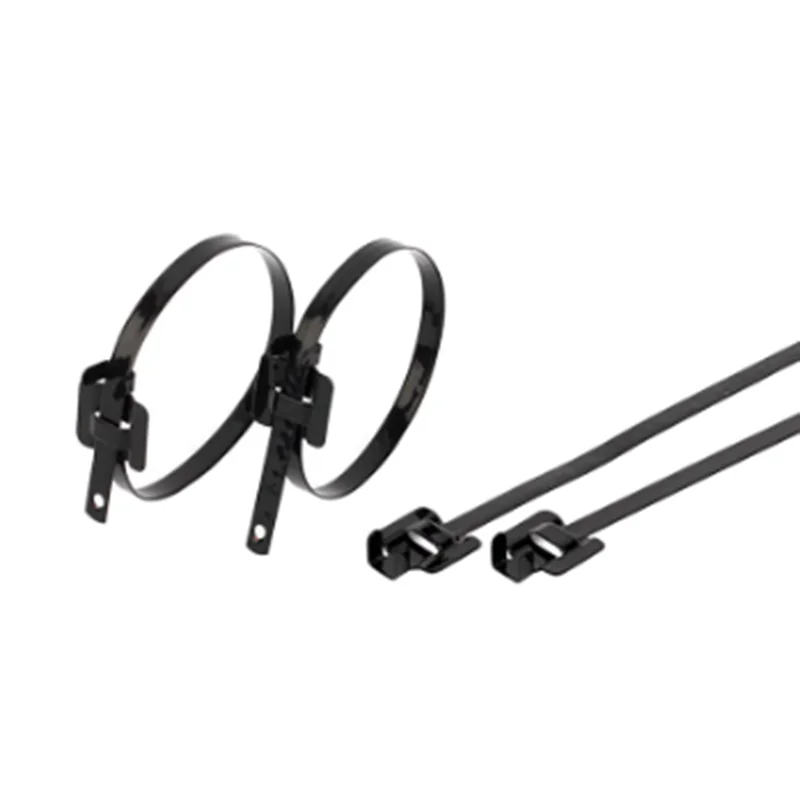
Epoxy coated releasable cable tie systems are engineered to combine mechanical strength, corrosion resistance, and reusability in one fastening solution. They are widely used in marine, offshore, industrial, and heavy-duty electrical environments where standard cable ties cannot meet long-term performance requirements.
What Are Epoxy Coated Releasable Cable Tie Systems?
These systems are advanced fastening solutions that combine:
A metal or stainless steel core for strength
An epoxy coating layer for corrosion and chemical resistance
A releasable locking mechanism for reuse and adjustment
Unlike standard plastic cable ties, they are designed for long-term industrial applications with frequent maintenance needs.
Multi-Layer Engineering Structure
The performance of epoxy coated releasable cable ties comes from their layered construction:
1. Core Material (Strength Layer)
Typically stainless steel or high-tensile metal provides:
High load-bearing capacity
Resistance to mechanical stress
Structural stability under vibration
2. Epoxy Coating (Protection Layer)
The epoxy resin coating provides:
Corrosion resistance (especially against saltwater and chemicals)
Electrical insulation properties in some applications
Surface smoothness to protect cable insulation
3. Locking Head Assembly (Functional Layer)
This includes:
Ratchet mechanism
Internal pawl system
Release tab for controlled unlocking
Each layer plays a specific role in system reliability.
Engineering of the Releasable Locking Mechanism
The releasable function is based on a ratchet-and-pawl system:
Step 1: Engagement
The serrated strap passes through the locking head, where the pawl engages the teeth.
Step 2: One-Way Locking
The pawl allows forward movement but prevents backward sliding under tension.
Step 3: Controlled Release
When the release tab is pressed:
The pawl disengages
The strap is freed without cutting
Engineering focus areas:
Pawl elasticity for repeated cycles
Precision molding for consistent engagement
Wear resistance under repeated use
Why Epoxy Coating Matters in Engineering Design
The epoxy layer is not just a surface finish—it is a functional engineering barrier.
Key engineering benefits:
Prevents direct metal exposure to corrosive environments
Reduces friction during tightening
Protects against salt spray and humidity
Extends service life in offshore conditions
In marine engineering, this coating is critical for maintaining long-term reliability.
Mechanical Performance in Dynamic Environments
Epoxy coated releasable cable ties are designed to handle:
Vibration
Maintains locking stability in moving equipment
Prevents loosening in offshore platforms and machinery
Load Stress
Even stress distribution along the strap
High tensile strength due to metal reinforcement
Thermal Variation
Maintains integrity under temperature fluctuations
Epoxy coating prevents surface degradation
Key Design Challenges in Engineering
Developing these systems requires solving several engineering problems:
1. Balancing Strength and Flexibility
Metal cores must be strong yet flexible enough for installation.
2. Coating Adhesion
Epoxy must bond strongly to metal to avoid peeling under stress.
3. Locking Precision
The ratchet system must:
Avoid slippage
Allow smooth tightening
Enable consistent release performance
4. Wear Resistance
Repeated release cycles must not degrade the pawl mechanism quickly.
Common Applications
Due to their engineering advantages, they are used in:
Offshore oil and gas platforms
Shipbuilding and marine electrical systems
Power generation facilities
Chemical processing plants
Heavy industrial maintenance systems
Conclusion
The engineering behind epoxy coated releasable cable tie systems is a combination of material science, mechanical design, and protective coating technology. By integrating a strong metal core, a corrosion-resistant epoxy layer, and a precise releasable locking mechanism, these cable ties deliver high performance in some of the most demanding environments on earth.
They are not just fastening tools—they are engineered systems designed for reliability, reusability, and long-term industrial stability.
FAQ
1. What is an epoxy coated releasable cable tie system?
It is a fastening system that combines a metal core, an epoxy protective coating, and a releasable locking mechanism, allowing both high strength and reusability in demanding environments.
2. Why is a metal core used in these cable ties?
The metal core provides high tensile strength and structural stability, making the tie suitable for heavy-duty and industrial applications where standard nylon ties are insufficient.
3. What is the purpose of the epoxy coating?
The epoxy coating acts as a protective barrier that resists corrosion, moisture, salt spray, and chemical exposure while also improving surface durability and cable protection.
4. How does the releasable locking mechanism work?
It uses a ratchet-and-pawl design. The strap locks in one direction for secure bundling, and when the release tab is pressed, the pawl disengages to allow controlled unlocking without cutting.
5. Are epoxy coated releasable cable ties reusable?
Yes. They are designed for multiple use cycles, although durability depends on load conditions, environmental exposure, and frequency of reuse.
6. Can these cable ties be used in marine and offshore environments?
Yes. They are specifically engineered for harsh environments such as offshore platforms and ships, where corrosion resistance and mechanical reliability are critical.