



Nylon Marker Tag with SS Inlay: A Complete Guide to Durable Cable Identification
Introduction
Clear and durable cable identification is essential in electrical installations, industrial automation, power distribution, telecommunications, control systems, and machinery. As the number of wires and cables in modern equipment continues to increase, reliable identification helps technicians quickly locate circuits, complete maintenance tasks, and reduce the risk of wiring errors.
In simple indoor environments, conventional paper labels or basic plastic markers may be sufficient. However, industrial cables can be exposed to moisture, vibration, chemicals, temperature changes, abrasion, and outdoor conditions. In these applications, identification materials need to provide better durability and long-term readability.
A Nylon Marker Tag with SS Inlay combines a nylon marker structure with a stainless steel inlay to provide a durable solution for wire and cable identification. This guide explains its construction, benefits, applications, selection factors, installation considerations, and common questions.
What Is a Nylon Marker Tag with SS Inlay?
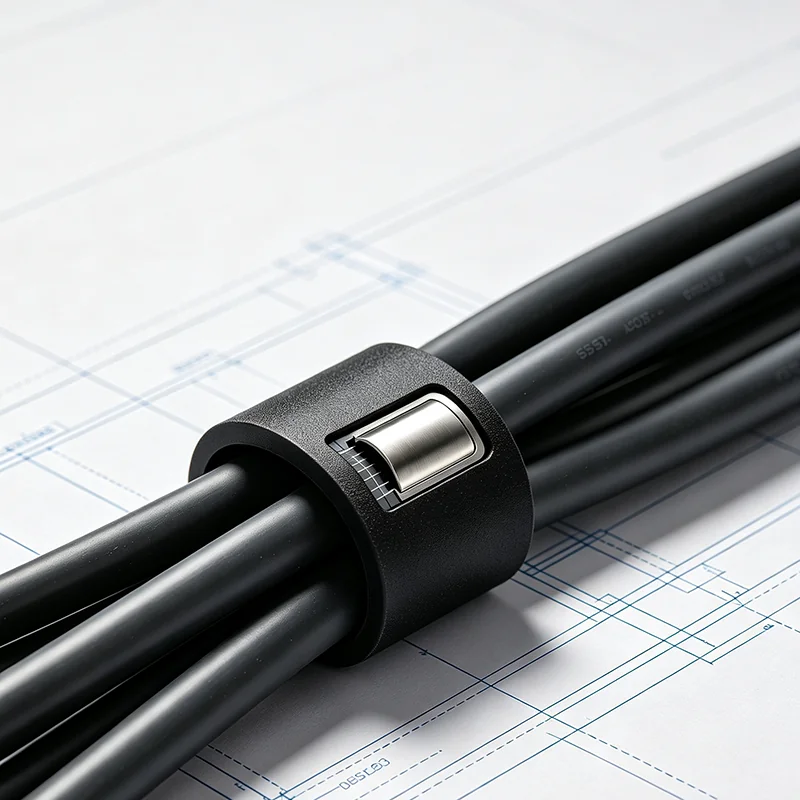
A Nylon Marker Tag with SS Inlay is a cable identification component made primarily from nylon and incorporating a stainless steel inlay or identification element. The nylon body provides a lightweight and mechanically durable structure, while the stainless steel component adds strength and resistance to corrosion and wear.
These markers can be used to display identification information such as cable numbers, wire codes, terminal references, equipment numbers, or other project-specific information.
Depending on the design, the tags can be attached to individual wires, cable bundles, control cables, power cables, or industrial equipment. Their compact structure makes them suitable for applications where clear identification is required without significantly increasing the size of the cable assembly.
Why Is Durable Cable Identification Important?
Cable identification is not simply a labeling task. In complex industrial systems, it is part of the overall maintenance and safety process.
A well-organized identification system allows technicians to identify cables more quickly during installation, inspection, testing, repair, and replacement. It can also reduce the time required to trace individual wires through a complicated control cabinet or cable network.
When identification labels become damaged, faded, detached, or difficult to read, maintenance personnel may need to spend additional time tracing cables manually. In large industrial systems, this can increase labor requirements and potentially contribute to wiring errors.
For this reason, selecting a durable marker is particularly important when cables are expected to remain in service for many years.
Construction of a Nylon Marker Tag with SS Inlay
The performance of a Nylon Marker Tag with SS Inlay comes from the combination of its materials.
Nylon Component
Nylon provides the basic structure of the marker. It is lightweight, mechanically strong, and suitable for many electrical and industrial applications. Depending on the specific grade, nylon can also offer resistance to temperature, moisture, chemicals, and mechanical stress.
The material should be selected according to the actual operating environment rather than simply based on the general term “nylon.”
Stainless Steel Inlay
The stainless steel inlay provides an additional durable component for identification. Stainless steel is valued for its corrosion resistance, mechanical strength, and resistance to wear.
The exact performance depends on the stainless steel grade, thickness, surface treatment, and application conditions. For demanding environments, these specifications should be evaluated before selecting the marker.
Marking Area
The marking area is where cable identification information is displayed. Depending on the product design, identification may be created using laser marking, engraving, stamping, thermal transfer printing, or other methods.
A durable marker should be paired with a marking method that can maintain readability under the expected environmental conditions.
Key Benefits of Nylon Marker Tags with SS Inlay
1. Durable Construction
The combination of nylon and stainless steel provides a practical balance of strength and weight. This construction can withstand normal handling during installation and maintenance while remaining suitable for compact cable identification.
2. Corrosion Resistance
Stainless steel offers good resistance to corrosion, which can be particularly valuable in environments where markers may encounter moisture, humidity, or other corrosive conditions.
3. Resistance to Mechanical Wear
Industrial cables may experience vibration, movement, handling, and abrasion. A robust marker construction can help reduce damage caused by normal mechanical exposure.
4. Long-Term Identification
A durable marker can help maintain clear cable identification over an extended service period. This is especially useful for equipment that is difficult or expensive to shut down for maintenance.
5. Lightweight Design
Although stainless steel provides strength, the nylon component keeps the overall marker relatively lightweight. This makes the product practical for wire and cable identification without adding unnecessary weight.
6. Wide Application Range
Nylon Marker Tags with SS Inlay can be used in electrical cabinets, industrial machinery, power systems, automation equipment, telecommunications infrastructure, and other cable-intensive applications.
Where Are Nylon Marker Tags with SS Inlay Used?
These markers can be used in many industries where reliable identification is required.
Electrical Control Cabinets
Control cabinets can contain hundreds or even thousands of wires. Proper identification makes it easier to distinguish circuits, terminals, and control connections during installation and maintenance.
Industrial Automation
Automation equipment uses sensors, motors, PLC systems, control devices, and communication networks. Durable cable markers can help technicians identify individual connections and reduce troubleshooting time.
Power Distribution
Power distribution systems require clear identification of cables and circuits. Durable markers can help maintain identification in switchgear, distribution cabinets, and related electrical equipment.
Telecommunications
Telecommunication systems often involve dense cable installations. Reliable identification helps technicians organize cable networks and locate individual connections more efficiently.
Industrial Machinery
Motors, sensors, control panels, and other machine components may require numerous electrical connections. Cable markers can help create a consistent identification system across the entire machine.
Outdoor and Demanding Environments
When properly specified, durable marker tags can also be used for outdoor equipment and other applications exposed to moisture, temperature fluctuations, and mechanical conditions.
How to Choose the Right Nylon Marker Tag with SS Inlay
Choosing the correct marker requires evaluating several technical factors.
Material
Check the nylon grade and stainless steel specification. The materials should be compatible with the expected temperature, humidity, chemicals, UV exposure, and mechanical conditions.
Size
The marker should match the cable diameter and available installation space. It should also provide sufficient marking area for the required identification information.
Marking Method
Choose a marking method according to the application’s durability requirements. For demanding environments, the marking should resist fading, abrasion, moisture, and other factors that could affect readability.
Fixing Method
Consider how the marker will be attached to the cable. Cable ties, clips, fasteners, or other mounting systems may be used depending on the product design.
Environmental Resistance
Consider the complete operating environment, including temperature, moisture, chemicals, UV exposure, vibration, and mechanical abrasion.
Customization
For large industrial projects, customized identification can improve consistency. Depending on the manufacturer, options may include custom text, numbering, symbols, logos, dimensions, and marking formats.
Nylon Marker Tag vs. Conventional Cable Labels
Not every cable identification project requires a heavy-duty marker. Conventional labels can still be suitable for simple indoor installations with relatively stable environmental conditions.
However, a Nylon Marker Tag with SS Inlay can provide advantages when durability and long-term identification are more important.
| Feature | Nylon Marker Tag with SS Inlay | Conventional Cable Label |
| Mechanical durability | High, depending on design | Varies |
| Corrosion resistance | Good with suitable SS grade | Usually lower |
| Moisture resistance | Good, depending on material | Varies |
| Abrasion resistance | Good | Often limited |
| Long-term use | Suitable for demanding applications | Depends on material |
| Industrial applications | Well suited | Application dependent |
| Customization | Available | Usually available |
The correct choice depends on the specific installation environment, expected service life, and identification requirements.
Marking Methods for Durable Cable Identification
The marking method is an important part of the identification system. A marker may have excellent material durability, but the identification can still become difficult to read if the marking method is not suitable for the application.
Laser marking can provide precise and permanent identification and is commonly considered for applications requiring long-term readability.
Engraving or stamping can create a physically defined identification surface and may be suitable for demanding environments.
Thermal transfer printing can provide clear identification for certain industrial applications, particularly when the appropriate compatible materials and ribbons are used.
The best method depends on the marker construction, environmental exposure, required level of permanence, and project specifications.
Installation Considerations
Before installation, make sure the marker size and fixing method are compatible with the cable.
The cable surface should be reasonably clean so that the marker or fastening system can be installed correctly. Identification information should be positioned so that technicians can easily see it during inspection and maintenance.
For cable bundles, markers should be placed in a consistent location and orientation. A standardized identification method can make large cable systems much easier to understand.
In high-vibration environments, verify that the marker is securely fixed and cannot move excessively along the cable.
Common Mistakes to Avoid
One common mistake is selecting a marker based only on its size or price. Industrial applications often have environmental requirements that should be evaluated before purchase.
Another mistake is choosing a durable marker but using an unsuitable marking method. The tag may remain physically intact while the identification becomes unreadable.
It is also important to avoid using the same marker specification for every environment. An indoor control cabinet and an outdoor electrical installation may have completely different requirements for temperature, UV resistance, moisture protection, and corrosion resistance.
Finally, buyers should confirm cable dimensions and installation requirements before ordering large quantities, particularly for customized markers.
How Durable Cable Identification Improves Maintenance
A consistent cable identification system can significantly improve maintenance efficiency.
When technicians can quickly identify a cable or circuit, they can spend less time tracing wires manually. This is particularly valuable in complex systems where multiple cables have similar appearances or follow the same routing path.
Clear identification can also make replacement and troubleshooting more systematic. When equipment is modified or expanded, a standardized marker system makes it easier to update cable records and maintain consistency.
For factories, data centers, power systems, and other installations where downtime can be costly, reliable cable identification can contribute to more efficient maintenance operations.
FAQ
What is a Nylon Marker Tag with SS Inlay?
It is a cable and wire identification marker that combines a nylon structure with a stainless steel inlay or identification component. It is designed for applications that require durable and reliable identification.
What are Nylon Marker Tags with SS Inlay used for?
They are used to identify wires, cables, terminals, equipment, control circuits, and other components in electrical and industrial systems.
Are Nylon Marker Tags with SS Inlay suitable for outdoor applications?
They can be suitable for outdoor use when the selected nylon, stainless steel, marking method, and fixing system meet the environmental requirements. UV exposure, moisture, temperature, and corrosion should all be considered.
How long do Nylon Marker Tags with SS Inlay last?
Service life depends on the material, marking method, installation environment, and exposure conditions. Properly selected markers can provide long-term identification, but the manufacturer’s technical specifications should be checked for specific applications.
Can these markers be customized?
Yes. Depending on the manufacturer, customization may include dimensions, text, numbers, symbols, logos, marking methods, and mounting configurations.
What information can be marked on a cable marker?
Common information includes cable numbers, wire numbers, terminal references, circuit codes, equipment identification, and other project-specific information.
What should I consider when choosing a Nylon Marker Tag with SS Inlay?
Key factors include nylon material, stainless steel grade, marker size, cable diameter, marking method, temperature resistance, chemical resistance, fixing method, and environmental conditions.
Why is stainless steel used in the marker?
Stainless steel provides good mechanical strength and corrosion resistance. It can also help create a more durable identification component for demanding industrial environments.
Are these markers suitable for control cabinets?
Yes. They can be used for identifying wires, terminals, circuits, and other components in industrial control cabinets. Their specific material and size should be selected according to the cabinet environment and cable requirements.
Conclusion
A Nylon Marker Tag with SS Inlay is a practical solution for businesses that need durable and reliable cable identification. Its combination of nylon and stainless steel can provide a useful balance of lightweight construction, mechanical durability, corrosion resistance, and long-term identification performance.
When selecting a marker, businesses should look beyond the basic product appearance and evaluate material, stainless steel specifications, size, marking method, fixing system, environmental resistance, and customization requirements.
For electrical systems, industrial automation, power distribution, telecommunications, machinery, and other cable-intensive applications, the right identification marker can make installation, inspection, troubleshooting, and maintenance more efficient while helping maintain a consistent and professional cable identification system.