



Key Factors to Consider When Buying Stainless Steel Band and Straps
Introduction
Stainless steel band and straps are widely used for securing cables, pipes, signs, equipment, brackets, and other components. They are particularly valuable in outdoor and industrial applications because stainless steel combines mechanical strength with corrosion resistance and long-term durability.
However, choosing the right stainless steel band is not simply a matter of selecting a suitable length. Material grade, band width, thickness, tensile strength, environmental conditions, buckle compatibility, installation method, and supplier quality can all affect the performance of the final fastening system.
For contractors, distributors, OEM buyers, and industrial users, understanding these factors before purchasing can help avoid compatibility problems, unnecessary costs, and premature replacement. This guide explains the key factors to consider when buying stainless steel band and straps.
Stainless Steel Grade
The stainless steel grade is one of the most important factors to consider.
304 stainless steel is commonly used for general industrial and outdoor applications. It provides a good balance of corrosion resistance, mechanical strength, durability, and cost.
316 stainless steel contains molybdenum and generally provides better resistance to chlorides and certain corrosive environments. It is often selected for coastal, marine, chemical, and other demanding applications.
The correct grade should be selected according to the actual installation environment. Choosing a higher grade than necessary may increase costs, while selecting a grade with insufficient corrosion resistance can shorten the service life of the fastening system.
Band Width
Band width directly affects the mechanical characteristics and application range of stainless steel strapping.
Narrower bands may be suitable for smaller cable bundles, signs, light-duty brackets, and applications where installation space is limited. Wider bands can provide a larger contact area and may be preferred for heavier-duty fastening.
The band width should also match the buckle, seal, clamp, or other accessories used in the installation. An incorrectly matched component can make installation difficult and affect the reliability of the finished connection.
Before purchasing, confirm both the required band width and the dimensions of compatible accessories.
Band Thickness
Thickness is another important specification because it influences strength, rigidity, and handling characteristics.
Thicker stainless steel bands are generally more suitable for demanding fastening applications where higher mechanical performance is required. Thinner bands may be easier to handle and can be sufficient for lighter applications.
However, thicker does not automatically mean better. Excessively thick material may increase cost and make installation more difficult without providing a meaningful benefit for a light-duty application.
The ideal thickness should be determined based on the load, installation conditions, available space, and required service life.
Tensile Strength and Load Requirements
Before purchasing stainless steel band and straps, buyers should understand the mechanical requirements of the application.
Consider the weight of the equipment being secured, expected vibration, wind loads, movement, and other external forces. The selected band should provide sufficient strength for the intended application.
It is also important to consider the entire fastening system rather than evaluating the band alone. The buckle, clamp, seal, and installation method can influence the overall holding performance.
For critical applications, buyers should request relevant mechanical specifications or test data from the supplier.
Environmental Conditions
The installation environment can have a major impact on stainless steel banding performance.
Outdoor applications may expose the band to rain, humidity, UV radiation, temperature changes, pollution, and salt spray. Industrial environments may introduce chemicals, corrosive gases, or high temperatures.
For general environments, 304 stainless steel may provide sufficient corrosion resistance. For marine and coastal environments or applications with significant chloride exposure, 316 stainless steel may be a more appropriate choice.
Understanding the environmental conditions before purchasing helps ensure that the selected material can provide the expected service life.
Surface Finish
Surface finish can affect both appearance and handling.
A high-quality stainless steel band should have a consistent surface without excessive scratches, contamination, deformation, or other visible defects. For visible applications such as signage and architectural installations, appearance may be particularly important.
Surface quality can also influence handling during installation. Rough or damaged surfaces and poorly finished edges may increase the risk of cuts or make the band more difficult to handle.
Buyers should therefore consider both functional and aesthetic requirements when specifying the surface finish.
Edge Quality
The edges of stainless steel band and straps deserve particular attention.
Banding is often cut, tensioned, and handled manually during installation. Poorly finished edges can be sharp and create unnecessary handling risks.
Reliable manufacturing processes should provide consistent cutting and suitable edge quality. Depending on the product design, deburring or other finishing processes may be used to improve handling.
For large installation projects, consistent edge quality can also contribute to smoother installation and reduce problems during field work.
Length and Packaging Format
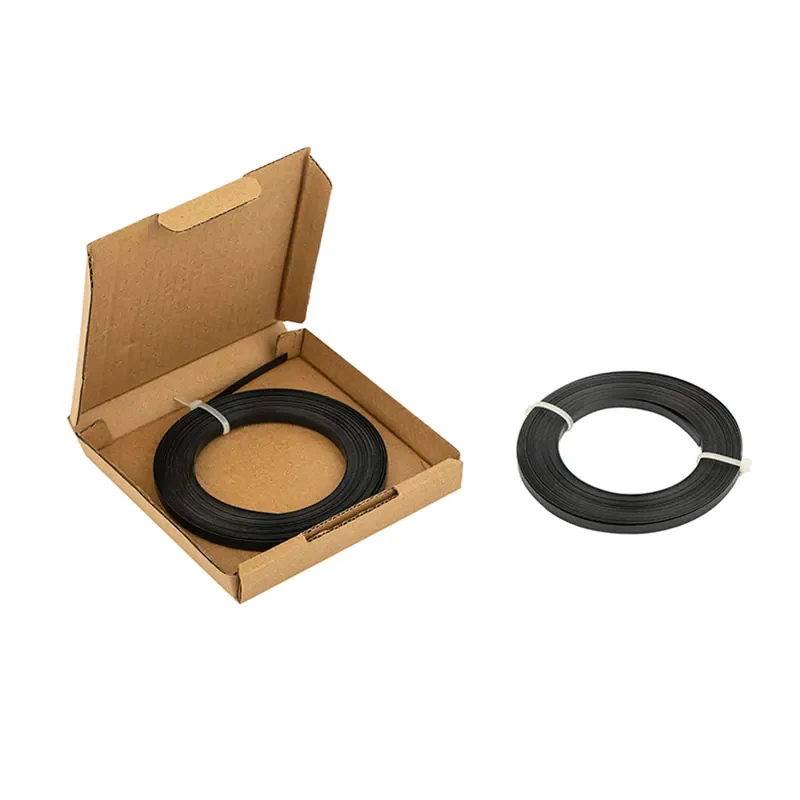
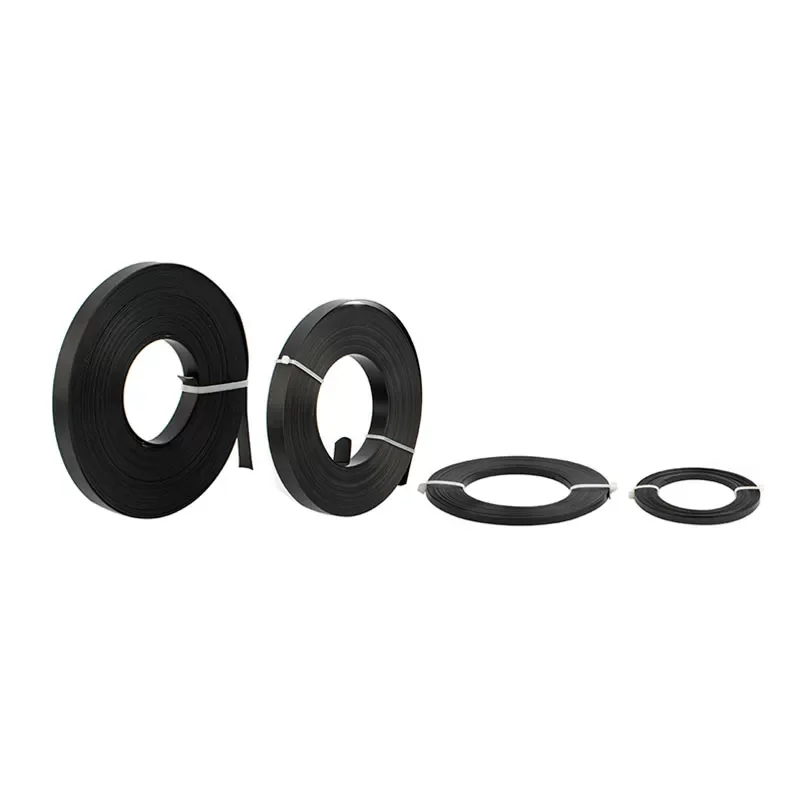
Stainless steel band is available in different lengths and packaging formats, including coils, rolls, and pre-cut straps.
For large projects, longer rolls can reduce the frequency of material changes during installation. For smaller applications, pre-cut lengths may be more convenient and can simplify inventory management.
The required length should take into account the circumference of the object, buckle connection, tensioning process, and additional material needed for locking and cutting.
Packaging should also protect the band from deformation and contamination during storage and transportation.
Buckle and Accessory Compatibility
Stainless steel band and straps are commonly used with buckles, seals, clamps, tensioning tools, and other accessories.
These components should be compatible with the selected band width, thickness, and material grade. A mismatch can lead to installation difficulties or reduce the holding performance of the finished fastening.
For this reason, it can be advantageous to purchase the band and compatible buckles from the same supplier, especially for large projects or customized systems.
If a supplier offers a complete banding system, ask for recommendations regarding the appropriate buckle and installation tool for the selected band.
Installation Method
The installation method should be considered before choosing the band specification.
Manual banding tools may be suitable for occasional maintenance or small installation projects. For repetitive installation work, specialized tensioning and cutting tools can improve productivity and provide more consistent results.
The selected band should be suitable for the installation tool being used. Buyers should confirm compatibility before placing an order.
Proper installation is just as important as product quality. Even a high-quality stainless steel band can perform poorly if it is incorrectly tensioned, locked, or cut.
Corrosion Resistance Requirements
Although stainless steel provides inherent corrosion resistance, not all stainless steel grades perform identically in every environment.
Buyers should identify the type and severity of corrosion exposure before selecting the material. Moisture, salt, chlorides, chemicals, and industrial pollutants can all affect long-term performance.
For applications where replacement is difficult, investing in a more corrosion-resistant grade may provide better long-term value.
This is especially relevant for utility poles, telecommunications infrastructure, marine equipment, outdoor electrical systems, and other installations that may remain in place for many years.
Customization Requirements
Standard stainless steel band specifications can meet many common applications, but some projects require customized products.
Depending on the supplier’s manufacturing capabilities, customization may be available for band width, thickness, length, packaging, surface finish, marking, or other requirements.
Before requesting customization, provide clear technical information about the intended application. The supplier can then evaluate whether the requested specification is practical and recommend an appropriate configuration.
For OEM projects and distributors, customized packaging can also help improve product identification and inventory management.
Supplier Manufacturing Capability
The supplier’s manufacturing capability is an important factor when purchasing stainless steel band and straps in commercial quantities.
A reliable supplier should have stable production processes and the ability to maintain consistent dimensions and material quality across different batches.
For larger orders, ask about production capacity, quality control, inspection procedures, lead times, and raw material management. A supplier that can support consistent production is generally better suited to long-term procurement.
This is particularly important for distributors and contractors who need repeat orders with the same specifications.
Quality Control and Documentation
Quality control should be considered before placing an order rather than after receiving the products.
Ask the supplier how incoming stainless steel materials are inspected and how finished products are checked. Relevant quality checks may include material verification, dimensional inspection, surface inspection, and packaging inspection.
Depending on the project, buyers may also require material certificates, inspection reports, or other quality documentation.
Clear documentation can help buyers verify that the supplied product matches the agreed specifications and can be particularly important for regulated or technically demanding projects.
Minimum Order Quantity and Lead Time
Minimum order quantity can have a significant impact on purchasing decisions.
Large manufacturers may offer competitive prices for bulk orders but require higher minimum quantities. Smaller orders may be more suitable for distributors or suppliers with flexible production and inventory arrangements.
Lead time is equally important. If the banding is required for a scheduled installation, confirm production and shipping times before placing the order.
For ongoing projects, it is useful to discuss both standard lead times and the supplier’s ability to handle repeat orders.
Price and Total Cost of Ownership
Price is naturally an important consideration, but the lowest unit price should not automatically determine the supplier or product selection.
A lower-priced stainless steel band may differ in material grade, dimensions, surface quality, packaging, or manufacturing consistency. These differences can affect installation efficiency and service life.
Instead, buyers should consider the total cost of ownership, including purchase price, installation labor, maintenance, replacement frequency, transportation, and potential downtime.
A higher-quality stainless steel band that lasts longer and installs more efficiently may provide better overall value even when its initial price is higher.
Supplier Experience and Customer Support
Supplier experience can be particularly valuable when the application has specific technical requirements.
An experienced supplier may be able to recommend appropriate material grades, dimensions, buckles, and installation methods based on the application.
Good customer support is also important when dealing with customized products, technical drawings, samples, quality issues, and repeat orders.
A supplier that communicates clearly and responds efficiently can help reduce purchasing mistakes and improve project coordination.
How to Select the Right Stainless Steel Band and Straps
A practical selection process should begin with the application rather than the product price.
First, determine the installation environment and expected service life. Then select the appropriate stainless steel grade, followed by the required band width, thickness, and length.
Next, confirm the mechanical requirements and compatibility with buckles and installation tools. Finally, evaluate the supplier’s manufacturing capabilities, quality control, customization options, lead time, packaging, and total cost.
For demanding applications, requesting samples before placing a large order can provide an additional opportunity to verify dimensions, surface quality, installation performance, and accessory compatibility.
Conclusion
Buying stainless steel band and straps requires careful consideration of several factors. Material grade, width, thickness, tensile strength, corrosion resistance, surface quality, edge condition, accessory compatibility, and installation method all influence the performance of the final fastening system.
The supplier is equally important. Manufacturing capability, quality control, documentation, customization, production capacity, packaging, delivery, and customer service can determine whether a supplier is suitable for long-term cooperation.
For general applications, 304 stainless steel can provide a practical combination of corrosion resistance and cost. For marine, coastal, or chloride-rich environments, 316 stainless steel may be a better choice.
By evaluating the complete application and comparing suppliers based on both product quality and total value, buyers can select stainless steel band and straps that provide reliable fastening performance and long-term durability.
FAQ
What stainless steel grade is best for banding?
304 stainless steel is suitable for many general industrial and outdoor applications. 316 stainless steel is often preferred for marine, coastal, and chloride-rich environments because it provides improved corrosion resistance.
How do I choose the right stainless steel band thickness?
The required thickness depends on the application, load, fastening requirements, available installation space, and desired service life. Heavier-duty applications may require thicker banding.
Does stainless steel band width affect strength?
Yes. Band width, thickness, material grade, and tensile properties all influence the mechanical performance of stainless steel banding. The width should also match the selected buckle or other accessory.
What should I check when buying stainless steel band and straps?
Check the stainless steel grade, width, thickness, length, tensile strength, surface and edge quality, corrosion resistance, buckle compatibility, packaging, quality documentation, and supplier capabilities.
Are stainless steel buckles necessary for stainless steel banding?
Buckles or other locking components are commonly used to secure stainless steel banding. The specific component should be compatible with the band dimensions and installation method.
Can stainless steel band and straps be customized?
Yes, depending on the supplier. Custom options may include width, thickness, length, packaging, surface finish, and marking. Minimum order quantities and production lead times should be confirmed in advance.
Should I buy stainless steel band and buckles from the same supplier?
It can be beneficial because the supplier can provide components designed to work together. This can reduce compatibility issues and simplify procurement, particularly for large projects.
Is the cheapest stainless steel band the best choice?
Not necessarily. Buyers should consider material quality, dimensional consistency, service life, installation efficiency, packaging, delivery, and replacement costs rather than comparing unit prices alone.
How can I verify stainless steel band quality?
Request product specifications and, where required, material certificates or inspection documentation. Samples can also be tested for dimensions, surface quality, edge condition, and compatibility with the intended installation system.