



304 vs. 316 Stainless Steel Band and Straps: How to Choose the Right Grade
Introduction
Stainless steel band and straps are widely used for securing cables, pipes, signs, brackets, telecommunications equipment, and other components in industrial and outdoor installations. Their corrosion resistance, mechanical strength, and flexible installation make them suitable for applications where reliable fastening is required.
However, not all stainless steel banding materials have the same corrosion resistance. 304 and 316 stainless steel are two of the most commonly considered grades, and choosing between them is important when the fastening system will be exposed to moisture, chemicals, salt, or other demanding conditions.
The right grade depends on more than corrosion resistance alone. Installation environment, mechanical requirements, expected service life, maintenance conditions, and overall project cost should also be considered.
What Are 304 and 316 Stainless Steel Band and Straps?
304 and 316 stainless steel are stainless steel grades commonly used in industrial fastening applications.
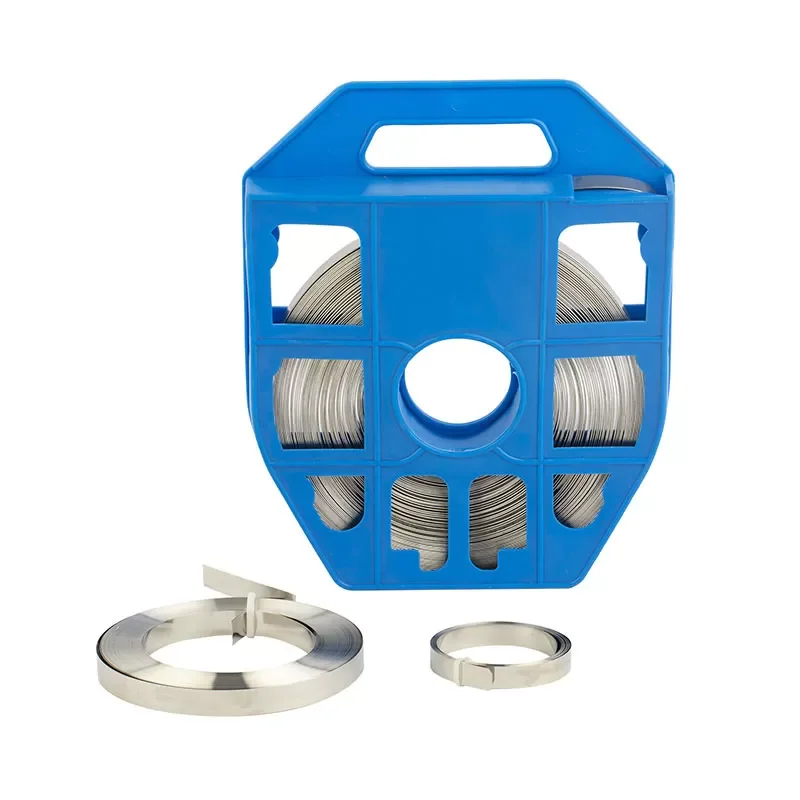
Stainless steel band and straps are generally supplied as continuous rolls or pre-cut lengths. They can be wrapped around poles, pipes, cables, brackets, or other structures and secured using compatible buckles, clamps, seals, or locking systems.
The main difference between 304 and 316 stainless steel is their resistance to specific corrosive environments. While both provide good corrosion resistance, 316 stainless steel contains molybdenum, which improves its resistance to chloride-related corrosion.
This distinction becomes particularly important in coastal, marine, offshore, and other high-exposure environments.
304 Stainless Steel Band and Straps
What Is 304 Stainless Steel?
304 stainless steel is a commonly used stainless steel grade that provides good corrosion resistance and mechanical performance.
For many general-purpose applications, 304 stainless steel banding provides a practical balance between performance and cost.
It can be suitable for applications such as:
General outdoor pole mounting
Cable and wire management
Electrical equipment fastening
Pipe and conduit support
Sign mounting
Industrial equipment installation
Telecommunications installations
Where the environment has normal outdoor exposure but does not involve severe chloride conditions, 304 stainless steel can often meet the requirements of the application.
Advantages of 304 Stainless Steel Banding
The main advantages include:
Good corrosion resistance: 304 provides protection against many common environmental conditions.
Versatile applications: It can be used across a wide range of industrial and outdoor fastening applications.
Good mechanical performance: Properly selected 304 banding can provide reliable circumferential fastening.
Cost efficiency: For applications that do not require enhanced chloride resistance, 304 can offer a practical material choice.
316 Stainless Steel Band and Straps
What Is 316 Stainless Steel?
316 stainless steel is another widely used stainless steel grade. Its composition includes molybdenum, which provides improved resistance to chloride-related corrosion compared with 304 stainless steel.
This makes 316 stainless steel particularly useful in environments where salt, seawater, or other corrosive substances are present.
Common applications include:
Coastal infrastructure
Marine installations
Offshore equipment
Highly humid environments
Outdoor installations with significant salt exposure
Chemical-related applications where appropriate
Demanding industrial environments
Advantages of 316 Stainless Steel Banding
Improved chloride resistance: 316 is generally better suited to environments where chloride exposure is a significant concern.
Suitable for marine environments: It can be a preferred option for coastal and marine installations.
Long-term durability: Better corrosion resistance can help support longer service life under demanding environmental conditions.
Reduced corrosion-related maintenance: In suitable applications, improved material resistance can help reduce concerns associated with corrosion and premature replacement.
304 vs. 316 Stainless Steel: Key Differences
The most important distinction between the two grades is their performance in corrosive environments.
| Feature | 304 Stainless Steel | 316 Stainless Steel |
| General corrosion resistance | Good | Very good |
| Chloride resistance | Good but limited in severe exposure | Improved |
| General outdoor use | Suitable | Suitable |
| Coastal applications | May be suitable depending on exposure | Generally preferred |
| Marine environments | Limited for demanding conditions | Better suited |
| Industrial applications | Widely used | Used for more demanding environments |
| Relative material cost | Generally lower | Generally higher |
| Best use case | General-purpose fastening | High-corrosion environments |
The table provides a general comparison. Actual performance depends on the specific environment, product design, band dimensions, installation method, and exposure conditions.
Why Does Chloride Exposure Matter?
Chloride exposure is one of the most important factors when selecting between 304 and 316 stainless steel.
Salt spray, seawater, coastal air, and some industrial environments can introduce chlorides that increase the risk of localized corrosion.
For example, a stainless steel band installed on an inland utility pole may experience relatively moderate environmental exposure. In contrast, a band installed near the ocean may be exposed to salt-laden air and moisture for extended periods.
In the second situation, 316 stainless steel may provide a more suitable level of corrosion resistance.
This does not mean that 316 is automatically required for every outdoor application. Material selection should always be based on the actual service environment.
304 vs. 316 for Outdoor Pole Mounting
Pole mounting is one of the common applications for stainless steel band and straps.
These systems may be used to secure:
Fiber optic cable supports
Electrical cables
Communication equipment
Junction boxes
Signs
Pipes
Conduits
Brackets
Sensors
Outdoor monitoring equipment
For normal outdoor installations away from severe corrosive exposure, 304 stainless steel can be an effective choice.
For poles located in coastal regions, marine facilities, offshore environments, or areas with significant salt exposure, 316 stainless steel can offer improved resistance to chloride-related corrosion.
The decision should also consider the expected service life and accessibility of the installation. If replacing a fastening system would be difficult or expensive, investing in a more corrosion-resistant grade may be worth considering.
How to Choose Between 304 and 316 Stainless Steel Band and Straps
1. Evaluate the Installation Environment
Start by identifying where the stainless steel band will be installed.
Consider:
Indoor or outdoor installation
Humidity
Rain exposure
Salt exposure
Seawater contact
Chemical exposure
Temperature conditions
Industrial pollution
A relatively clean and dry environment may not require the additional corrosion resistance of 316.
2. Consider Coastal or Marine Exposure
If the installation is located near the sea or in a marine environment, chloride exposure should be treated as a major selection factor.
In these conditions, 316 stainless steel is often a more appropriate choice than 304.
3. Consider the Required Service Life
The required service life of the fastening system can influence material selection.
For temporary or easily accessible installations, 304 may provide sufficient performance.
For permanent infrastructure or installations that are difficult to access, selecting a material with greater corrosion resistance can help support long-term reliability.
4. Consider Mechanical Requirements
Material grade is only one part of the selection process.
You should also evaluate:
Band width
Band thickness
Equipment weight
Pole or pipe diameter
Required tension
Buckle design
Number of fastening points
Installation method
A higher stainless steel grade does not automatically compensate for an incorrectly sized band.
5. Consider the Total Project Cost
316 stainless steel generally represents a higher material investment than 304.
However, initial purchase price should not be the only consideration. Installation difficulty, maintenance access, replacement costs, and expected service life can also affect the total cost of ownership.
For demanding applications, the additional cost of 316 may be justified by the need for improved corrosion resistance.
Should You Always Choose 316?
No.
Although 316 provides improved resistance to chloride-related corrosion, choosing it for every application may unnecessarily increase material costs.
If the installation environment is relatively mild and does not involve significant chloride exposure, 304 stainless steel can be a practical solution.
The goal is not simply to select the highest-grade material available. The goal is to select a stainless steel band that provides an appropriate balance of:
Corrosion resistance
Mechanical performance
Service life
Installation requirements
Environmental compatibility
Project budget
Other Factors to Consider Besides Stainless Steel Grade
Band Width
Wider stainless steel bands can provide greater contact area around the mounted structure and may help distribute the fastening load.
The appropriate width depends on the application and required holding strength.
Band Thickness
Band thickness affects mechanical performance and handling characteristics. Heavy-duty installations may require thicker banding than lightweight cable management applications.
Buckle Compatibility
The buckle or locking mechanism should be compatible with the selected band width and thickness.
A properly matched fastening system helps ensure consistent tension and secure locking.
Coating Options
Some stainless steel banding products are available with protective coatings. Depending on the product design, coatings can provide additional surface protection or reduce direct contact between the metal band and the mounted component.
When considering coated products, evaluate coating material, thickness, environmental resistance, and compatibility with the application.
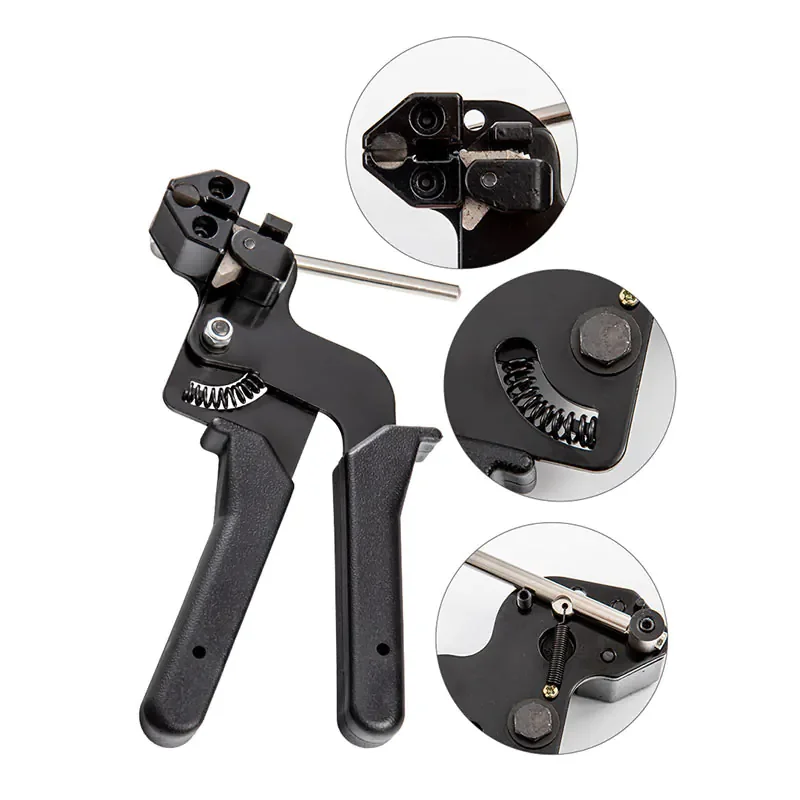
Installation Tools
A suitable tensioning and cutting tool can improve installation consistency.
Improper tensioning can create problems regardless of whether 304 or 316 stainless steel is used.
Common Applications: Which Grade Should You Choose?
General Outdoor Cable Management
Recommended consideration: 304
For general outdoor cable and wire management where chloride exposure is limited, 304 stainless steel can provide a practical balance of corrosion resistance and cost.
Utility Pole Mounting
Recommended consideration: 304 or 316
For standard outdoor environments, 304 may be suitable. For coastal or salt-exposed locations, 316 may be preferable.
Marine Applications
Recommended consideration: 316
Marine environments can involve significant exposure to seawater and chloride-containing moisture. 316 is generally better suited to these conditions.
Telecommunications Infrastructure
Recommended consideration: 304 or 316
The selection depends heavily on the installation location. Inland installations may use 304, while coastal infrastructure may benefit from 316.
Industrial Installations
Recommended consideration: 304 or 316
Consider the specific chemicals, humidity, temperature, and other environmental conditions present at the installation site.
Coastal Signage
Recommended consideration: 316
Where signs and brackets are installed in salt-laden coastal environments, the improved chloride resistance of 316 can be advantageous.
Common Mistakes When Selecting Stainless Steel Banding
Choosing Only Based on Price
Selecting the cheapest material may reduce initial costs but can create higher maintenance or replacement costs if the band is exposed to a demanding environment.
Assuming All Outdoor Applications Are the Same
Outdoor conditions vary significantly. An inland installation and a coastal installation may require different material considerations.
Focusing Only on Stainless Steel Grade
Even the correct material grade will not perform properly if the band is incorrectly sized or installed.
Band width, thickness, buckle compatibility, tension, and installation quality are equally important.
Using Incompatible Accessories
The buckle, seal, clamp, and tensioning tool should be appropriate for the selected banding system.
Ignoring Maintenance Conditions
Consider how easily the installation can be inspected or replaced. Hard-to-access infrastructure may justify choosing a more corrosion-resistant material from the beginning.
FAQ
Is 304 or 316 stainless steel better for outdoor banding?
Both can be suitable. 304 is often appropriate for general outdoor applications, while 316 is generally better suited to environments with significant chloride or salt exposure.
What is the main difference between 304 and 316 stainless steel?
The key difference for banding applications is corrosion resistance. 316 contains molybdenum, which improves resistance to chloride-related corrosion.
Is 316 stainless steel worth the extra cost?
It can be, especially for coastal, marine, offshore, or other highly corrosive environments. For mild environments, 304 may provide sufficient performance at a lower material cost.
Can 304 stainless steel be used near the sea?
It may be suitable for some applications, but significant salt and chloride exposure can make 316 a more appropriate choice.
Is 316 stainless steel stronger than 304?
Material grade should not be selected simply based on strength. For stainless steel banding, environmental corrosion resistance is one of the main reasons to consider 316 over 304. Band width, thickness, design, and fastening method also affect overall performance.
How do I choose the right stainless steel band?
Evaluate the installation environment, pole or pipe diameter, equipment weight, required service life, band width, thickness, buckle compatibility, and expected exposure to moisture, salt, or chemicals.
Conclusion
Choosing between 304 vs. 316 stainless steel band and straps depends primarily on the installation environment and required service performance.
304 stainless steel can be a practical choice for many general-purpose outdoor and industrial fastening applications, particularly where chloride exposure is limited. 316 stainless steel provides improved resistance to chloride-related corrosion and can be a better option for coastal, marine, offshore, and other demanding environments.
However, stainless steel grade is only one part of a reliable fastening system. Band width, thickness, buckle compatibility, installation tools, tension, equipment weight, and expected service life should also be considered.
By evaluating the actual operating environment and application requirements rather than choosing solely by price or material grade, users can select stainless steel band and straps that provide a suitable balance of durability, performance, and long-term value.