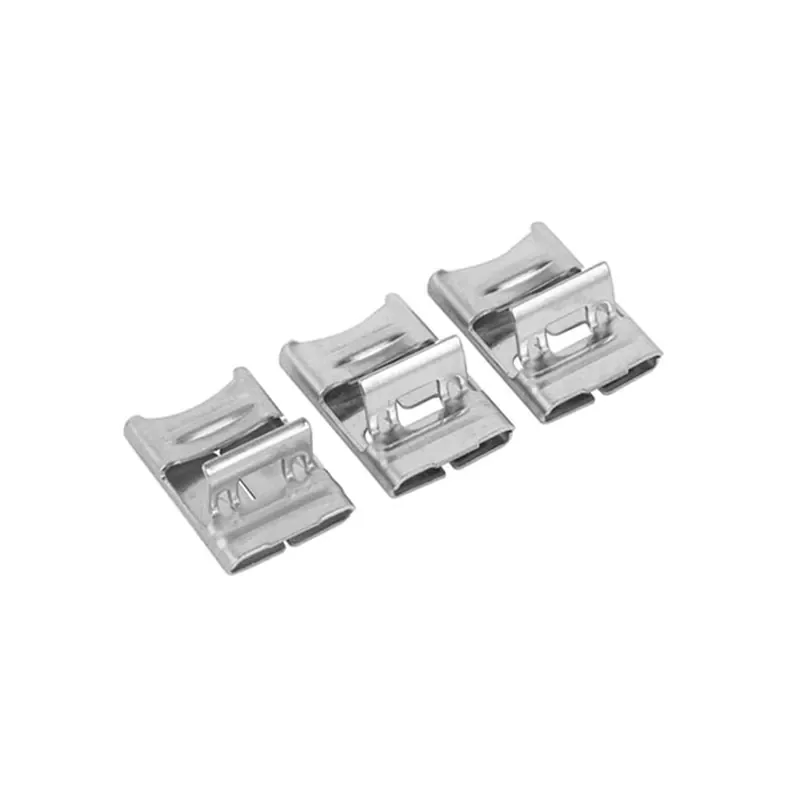




Steel Buckles, Locks and Seals for Stainless Steel Strapping
Introduction
Stainless steel strapping is widely used for securing cables, pipes, signs, poles, hoses, insulation, and industrial equipment. It provides high strength, corrosion resistance, and durability, making it suitable for both indoor and outdoor applications.
However, stainless steel strapping alone does not create a complete fastening system. Steel buckles, locks and seals are used to secure the strap after it has been wrapped and tensioned around the object.
Choosing the right fastening component is important because it can affect the holding strength, installation efficiency, corrosion resistance, and service life of the entire strapping system. The buckle, lock, or seal should therefore be selected according to the strap specifications and the conditions of the application.
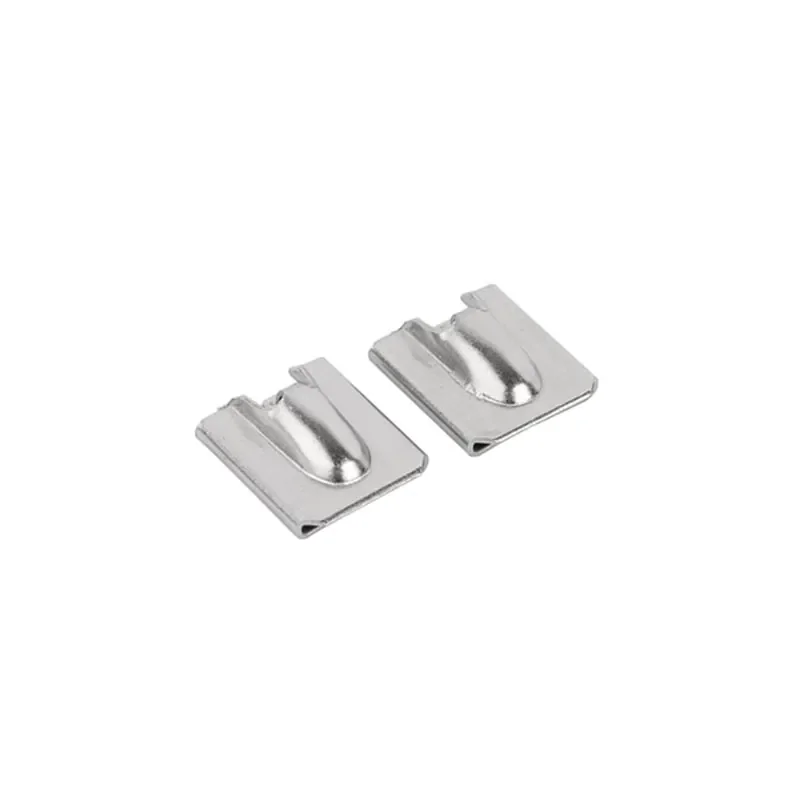
What Are Steel Buckles, Locks and Seals?
Steel buckles, locks and seals are metal components designed to secure stainless steel strapping after the band has been positioned around an object.
Although these products are often discussed together, their structures and installation methods can be different. A buckle may hold the strap through friction, folding, or a specific locking structure. A steel lock may provide a mechanical locking connection, while a seal is commonly compressed or crimped to secure the strap.
The exact terminology can vary between manufacturers. Therefore, buyers should pay attention to the actual product design, compatible strap dimensions, and recommended installation method rather than relying only on the product name.
Why Are Buckles, Locks and Seals Important for Stainless Steel Strapping?
Stainless steel strapping is designed to withstand considerable tension and environmental exposure. The fastening component must be capable of retaining the strap after installation.
If the fastening component is poorly matched to the strap, the system may experience slipping, deformation, difficult installation, or reduced holding performance.
A properly matched fastening component helps maintain the tension applied during installation and keeps the strap securely positioned around the object. This is particularly important for applications exposed to vibration, wind, temperature changes, moisture, or mechanical loads.
Common Materials for Steel Strapping Fasteners
The material of the buckle, lock, or seal should be compatible with the stainless steel strapping and the application environment.
304 Stainless Steel
304 stainless steel is commonly used for general industrial and outdoor applications. It offers good corrosion resistance and mechanical performance while maintaining a relatively practical cost.
It can be suitable for cable bundling, pole mounting, sign installation, and many standard outdoor applications.
316 Stainless Steel
316 stainless steel provides improved resistance to chloride-related corrosion compared with 304 stainless steel. It is often selected for coastal, marine, chemical, and other demanding environments.
Although 316 stainless steel can have a higher material cost, it may provide better long-term performance when corrosion exposure is severe.
Galvanized Steel
Galvanized steel components may be used where moderate corrosion resistance is sufficient. They can be appropriate for certain indoor or less aggressive environments, although stainless steel is generally preferred when long-term corrosion resistance is a major requirement.
Steel Buckles for Stainless Steel Strapping
Steel buckles are commonly used to hold stainless steel bands in place after tensioning.
The strap is normally passed through or around the buckle and then tensioned using an appropriate tool. Depending on the buckle design, the strap may then be folded or locked into position.
Steel buckles can be used in cable management, pole mounting, telecommunications, solar installations, and general industrial fastening.
The buckle size should correspond to the width and thickness of the stainless steel strap. Using the correct size helps ensure smooth installation and reliable retention.
Steel Locks for Stainless Steel Strapping
Steel locks provide another method of securing stainless steel strapping. Their locking structure can help prevent the strap from loosening after tension has been applied.
Different steel locks may use different mechanisms, including folding, clamping, or other mechanical locking methods.
They are particularly useful when a secure connection is required in applications exposed to vibration or other mechanical movement.
As with buckles, the lock must be selected according to the strap width, thickness, material, and installation procedure.
Steel Seals for Stainless Steel Strapping
Steel seals are generally used together with a tensioning and sealing process. After the stainless steel strap is wrapped around the object, it is tensioned and the seal is positioned at the connection point.
A suitable tool is then used to crimp or compress the seal, creating a secure connection.
Steel seals are often used in heavy-duty strapping systems because they can provide a compact and reliable fastening point when correctly installed.
The seal dimensions, material, and shape should match the stainless steel strapping and the recommended sealing tool.
How to Match Fasteners with Stainless Steel Strapping
The first specification to check is the strap width. A fastening component must have a compatible opening or locking structure for the selected band.
The second is strap thickness. Thicker stainless steel straps may require fastening components designed for higher loads and specific installation methods.
The third is material compatibility. Using stainless steel fasteners with stainless steel strapping can provide a consistent corrosion-resistant system, particularly for outdoor installations.
Finally, buyers should check the installation tool. A buckle, lock, or seal may require a particular tensioning or crimping method. The complete system should be tested to ensure that the strap and fastening component work properly together.
Applications of Stainless Steel Strapping with Steel Fasteners
Cable and Wire Management
Stainless steel strapping combined with steel buckles or locks can be used to bundle and secure cables in telecommunications, electrical, industrial, and infrastructure applications.
The metal construction provides durability where plastic fastening products may not be suitable.
Pole and Sign Mounting
Steel buckles, locks and seals are widely used for attaching signs, brackets, cable supports, and other equipment to poles.
Stainless steel is especially useful for outdoor installations because it can withstand moisture and changing weather conditions.
Solar and Electrical Equipment
Stainless steel strapping can be used to secure components associated with solar installations and electrical infrastructure. Corrosion-resistant buckles and locks can help maintain the integrity of outdoor fastening points.
Pipes and Industrial Components
Metal strapping systems can also be used to secure pipes, hoses, insulation, and other industrial components. The appropriate strap thickness and fastening component should be selected according to the load and operating conditions.
Stainless Steel Buckles, Locks and Seals for Outdoor Use
Outdoor applications can expose fastening components to rain, humidity, salt, UV exposure, temperature changes, and pollution.
For this reason, corrosion resistance is an important consideration. 304 stainless steel can meet the requirements of many general outdoor installations, while 316 stainless steel may be more appropriate for marine and high-chloride environments.
The fastening component should also be protected against mechanical damage during transportation, storage, and installation. Proper installation is equally important because even a corrosion-resistant component can perform poorly if it is incorrectly installed.
Advantages of Using Stainless Steel Fastening Components
Using stainless steel buckles, locks and seals with stainless steel strapping offers several advantages.
Corrosion resistance is one of the most important benefits. A stainless steel fastening system can be suitable for outdoor and demanding environments where moisture and corrosion are concerns.
Mechanical durability is another advantage. Steel components can provide strong and stable fastening for cables, pipes, poles, and industrial equipment.
Long-term performance is also important. When the strap, fastener, and installation method are correctly matched, the complete system can provide reliable service with relatively low maintenance requirements.
How to Choose the Right Fastener for Stainless Steel Strapping
Start by identifying the specifications of the stainless steel strap, including its width, thickness, and material grade. Then determine the load, vibration, and environmental conditions of the application.
For standard environments, 304 stainless steel may provide a suitable balance of performance and cost. For marine, coastal, or highly corrosive environments, 316 stainless steel may be preferable.
The installation method should also be considered. If the project uses manual tensioning and crimping tools, the selected buckle, lock, or seal should be compatible with those tools.
For large-volume projects, it is also important to consider product consistency, packaging, supply capacity, and quality control.
Why Supplier Quality Matters
The performance of steel buckles, locks and seals depends not only on their material but also on manufacturing consistency.
Dimensional accuracy, material quality, forming precision, surface finish, and production control can all affect the final product.
A reliable manufacturer should be able to provide clear specifications, consistent batches, suitable material options, and quality inspection. For OEM projects, customized dimensions, packaging, markings, and product designs may also be available.
Buyers should therefore evaluate the supplier’s manufacturing capabilities rather than choosing a product based only on its unit price.
Conclusion
Steel buckles, locks and seals for stainless steel strapping are essential components of reliable metal fastening systems. They help secure stainless steel bands around cables, pipes, poles, signs, solar equipment, and other industrial components.
The right fastening component should match the strap width, thickness, material, required holding performance, installation method, and operating environment. For general applications, 304 stainless steel can provide a practical combination of corrosion resistance and durability, while 316 stainless steel is often more suitable for harsh or chloride-rich environments.
By selecting compatible stainless steel strapping and high-quality buckles, locks or seals, buyers can create a secure, durable, and dependable fastening system for a wide range of industrial and outdoor applications.
FAQ
What are steel buckles, locks and seals used for?
They are used to secure stainless steel strapping around cables, pipes, poles, signs, equipment, and other objects that require durable metal fastening.
Can steel buckles be used with stainless steel strapping?
Yes. Steel and stainless steel buckles are commonly designed for use with stainless steel strapping. The buckle must be compatible with the strap width and thickness.
Are stainless steel seals better for outdoor applications?
Stainless steel seals provide good corrosion resistance and are suitable for many outdoor applications. The appropriate stainless steel grade should be selected according to the environment.
Should I choose 304 or 316 stainless steel fasteners?
304 stainless steel is suitable for many general applications. 316 stainless steel offers greater resistance to chloride-related corrosion and may be preferable for marine, coastal, and highly corrosive environments.
Do steel locks require special tools?
Some steel locks can be installed through folding or other manual methods, while other designs require specific tensioning or locking tools. Buyers should check the manufacturer’s installation recommendations.
How can I ensure that a buckle or seal is compatible with my stainless steel strap?
Check the strap width, thickness, material, and recommended fastening method. The supplier should provide compatible product specifications and installation guidance.