



304 vs. 316 Stainless Steel Buckles: Which Should You Choose?
Introduction
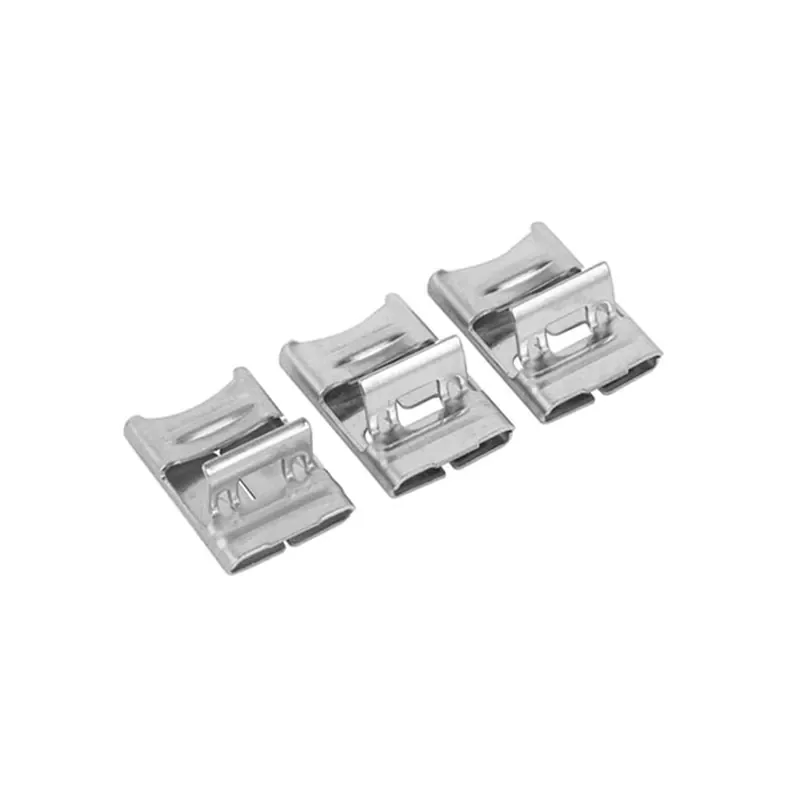
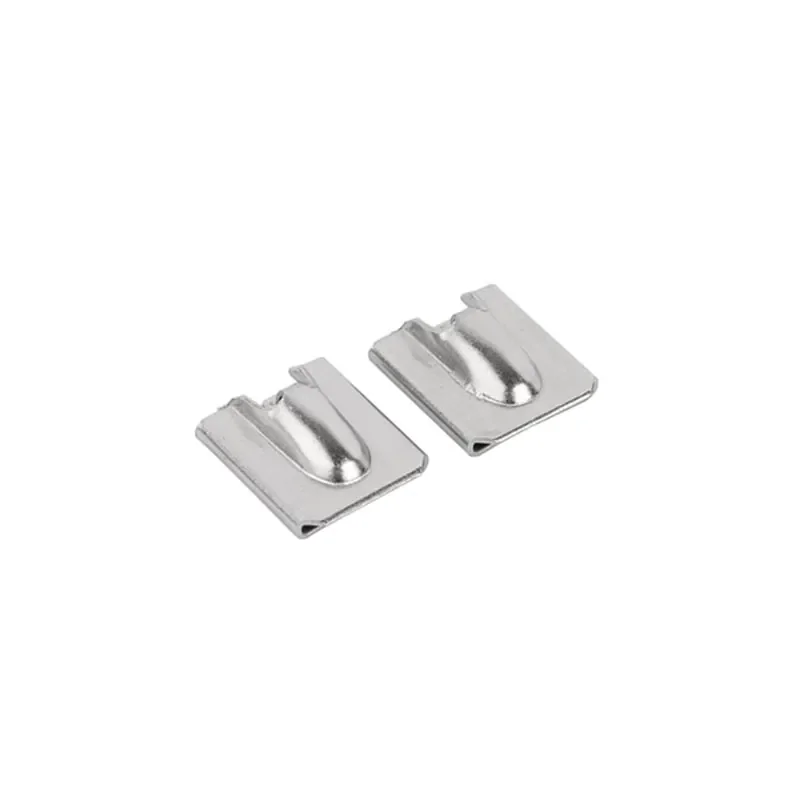
Stainless steel buckles are important components in strapping systems used for cable bundling, pole mounting, pipe securing, signage, telecommunications, solar installations, and industrial equipment. They help hold stainless steel banding securely in place and maintain fastening performance under different environmental conditions.
When choosing stainless steel buckles, one of the most common decisions is between 304 stainless steel buckles and 316 stainless steel buckles. Both materials provide good corrosion resistance and mechanical performance, but they are designed for somewhat different operating environments.
So, which should you choose? The answer depends mainly on the installation environment, exposure to moisture and chemicals, required service life, and overall project budget.

What Are 304 and 316 Stainless Steel Buckles?
304 and 316 are two widely used grades of austenitic stainless steel. Both are suitable for manufacturing buckles, locks, and other components used with stainless steel strapping.
304 stainless steel buckles are widely used for general-purpose applications because they offer a good balance between corrosion resistance, strength, availability, and cost. They are suitable for many indoor and outdoor installations where exposure to aggressive chemicals or high levels of salt is limited.
316 stainless steel buckles provide higher resistance to corrosion in demanding environments. Their improved resistance is particularly valuable in applications exposed to chlorides, saltwater, coastal conditions, and certain corrosive industrial environments.
The choice between them should therefore be based on the actual operating conditions rather than simply selecting the higher grade.
304 Stainless Steel Buckles: Advantages and Applications
304 stainless steel is one of the most commonly used stainless steel grades for industrial fastening components. It provides reliable corrosion resistance for many everyday applications while generally costing less than 316 stainless steel.
304 stainless steel buckles can be a practical choice for indoor cable management, general outdoor installations, electrical equipment, telecommunications infrastructure, pipe mounting, signage, and many industrial applications.
They are especially suitable when the installation environment is relatively clean and does not involve continuous exposure to saltwater, high chloride concentrations, or highly corrosive substances.
Another advantage is cost efficiency. For large-volume projects where extreme corrosion resistance is not required, choosing 304 stainless steel buckles can help control material costs without sacrificing the basic performance required for secure strapping.
316 Stainless Steel Buckles: Advantages and Applications
316 stainless steel is generally selected when stronger corrosion resistance is required. Its composition includes molybdenum, which improves resistance to chloride-related corrosion compared with 304 stainless steel.
This makes 316 stainless steel buckles particularly suitable for coastal, marine, offshore, and other environments where salt and moisture are major concerns.
They can also be considered for industrial applications where equipment may be exposed to corrosive chemicals or harsh atmospheric conditions. In these situations, the additional corrosion resistance of 316 can help maintain the condition and reliability of the fastening system over a longer service period.
Although 316 stainless steel buckles usually have a higher material cost than 304 buckles, the additional cost may be justified when replacing or maintaining fastening components in a highly corrosive environment would be difficult or expensive.
304 vs. 316 Stainless Steel Buckles: Key Differences
The biggest difference between 304 and 316 stainless steel buckles is their resistance to corrosive environments.
| Factor | 304 Stainless Steel Buckles | 316 Stainless Steel Buckles |
|---|---|---|
| Corrosion resistance | Good | Higher |
| General outdoor use | Suitable | Suitable |
| Coastal environments | Limited depending on exposure | Better choice |
| Marine applications | Usually not the first choice | Highly suitable |
| Chloride exposure | Moderate resistance | Better resistance |
| General industrial use | Suitable | Suitable |
| Relative material cost | Lower | Higher |
| Typical selection | General applications | Harsh environments |
This comparison does not mean that 316 is always better. It means that each grade has an appropriate application range.
How Does the Installation Environment Affect Your Choice?
The environment should be one of the first factors considered when selecting stainless steel buckles.
For indoor applications, 304 stainless steel is often sufficient, particularly when the installation is not exposed to aggressive chemicals or persistent moisture.
For general outdoor applications, both 304 and 316 may be suitable. The better choice depends on local climate, humidity, pollution, expected service life, and exposure to contaminants.
For coastal and marine environments, 316 stainless steel is generally the safer choice because salt and chlorides can accelerate corrosion. This is particularly important for pole mounting, outdoor telecommunications, marine equipment, and infrastructure installed close to the sea.
For industrial environments, the choice depends on the specific chemicals and operating conditions. If the buckle is exposed to corrosive substances, it is important to evaluate the actual environment rather than selecting a grade based only on general application categories.
304 vs. 316: Consider the Complete Strapping System
A stainless steel buckle should not be selected independently from the stainless steel band and other fastening components.
The buckle needs to be compatible with the stainless steel band and straps in terms of width, thickness, design, and installation method. The buckle, strap, and installation tool should work together as a complete system.
For example, using a 316 stainless steel buckle with a different strap grade does not automatically make the entire fastening system suitable for a highly corrosive environment. The band, buckle, lock or seal, and other exposed components should all be evaluated according to the application.
This is particularly important in long-term outdoor and marine installations where corrosion resistance across the complete system can affect service life.
What About Strength?
Both 304 and 316 stainless steel can provide the mechanical performance required for many strapping applications. However, the actual holding performance of a strapping system depends on more than the stainless steel grade.
Important factors include the width and thickness of the band, buckle design, locking method, installation tension, tool performance, and the way the strap is installed.
Therefore, buyers should not assume that choosing 316 automatically means the buckle has a higher load capacity than a 304 buckle. When strength is a key requirement, the complete system should be evaluated using the supplier’s specifications and test data.
Cost: Is 316 Worth the Extra Price?
304 stainless steel buckles are generally more economical, making them attractive for applications where corrosion conditions are moderate.
316 stainless steel buckles usually cost more because of their higher alloy content and enhanced corrosion resistance. However, the initial purchase price should not be the only consideration.
For difficult-to-access installations, infrastructure projects, marine equipment, or long-term outdoor applications, corrosion-related maintenance or replacement can be more expensive than the original component cost. In these situations, the additional investment in 316 may provide better long-term value.
For less demanding applications, 304 can offer a more cost-effective balance between performance and price.
How to Choose Between 304 and 316 Stainless Steel Buckles
A simple selection approach is to start with the operating environment.
Choose 304 stainless steel buckles when you need a reliable and economical fastening component for general indoor, outdoor, electrical, telecommunications, industrial, or equipment applications with moderate corrosion exposure.
Choose 316 stainless steel buckles when the installation involves coastal or marine environments, frequent salt exposure, chloride-rich conditions, or other demanding environments where enhanced corrosion resistance is important.
If the application falls between these categories, consider the expected service life, maintenance requirements, accessibility of the installation, local climate, and total project cost before making the final decision.
What Should You Ask a Stainless Steel Buckle Supplier?
When sourcing stainless steel buckles, buyers should confirm more than just whether the product is labeled 304 or 316.
Ask the supplier to confirm the stainless steel grade, buckle dimensions, compatible strap width and thickness, surface finish, locking design, packaging, and available quality documentation.
For large projects, it is also useful to request samples before placing a bulk order. Testing the buckle together with the actual stainless steel band and installation tool can help verify compatibility and installation performance.
A reliable supplier should also be able to provide consistent production quality and support customized dimensions or specifications when required.
Conclusion
The choice between 304 and 316 stainless steel buckles mainly depends on the installation environment and required corrosion resistance.
304 stainless steel buckles are a practical choice for general-purpose applications where good corrosion resistance and cost efficiency are important. 316 stainless steel buckles are better suited to demanding environments, particularly coastal, marine, and chloride-exposed applications.
Instead of automatically choosing the more expensive grade, evaluate the complete strapping system, environmental conditions, service life, installation requirements, and total cost. Selecting the appropriate stainless steel buckle grade can help improve fastening reliability and reduce unnecessary replacement and maintenance.
FAQs
Is 316 stainless steel better than 304 for buckles?
316 stainless steel offers higher corrosion resistance, especially in chloride and marine environments. However, 304 is often sufficient for general-purpose applications and can be more cost-effective.
Are 304 stainless steel buckles suitable for outdoor use?
Yes. 304 stainless steel buckles can be suitable for many outdoor applications. However, exposure to saltwater, high chloride levels, or highly corrosive conditions may make 316 a better option.
When should I use 316 stainless steel buckles?
316 is a good choice for coastal, marine, offshore, and other demanding environments where enhanced corrosion resistance is required.
Are 316 stainless steel buckles stronger than 304 buckles?
Material grade alone does not determine the holding capacity of a buckle. Buckle design, dimensions, strap size, installation tension, and locking method also affect system performance.
Can 304 buckles and 316 stainless steel straps be used together?
They may be compatible depending on the application and product design. However, buyers should consider the corrosion conditions of the complete fastening system and confirm compatibility with the supplier.
Are 316 stainless steel buckles worth the higher cost?
They can be worth the additional cost when the application involves severe corrosion exposure or requires long-term reliability with minimal maintenance. For general applications, 304 may provide better cost efficiency.
How do I choose the right stainless steel buckle?
Consider the environment, stainless steel grade, strap width and thickness, buckle design, installation tool, required holding performance, expected service life, and total project cost before choosing a buckle.