



How Strong Are Stainless Steel Band and Straps? Understanding Load Capacity
Introduction
Stainless steel band and straps are widely used for securing cables, pipes, signs, brackets, equipment, and other components in industrial and outdoor environments. Their combination of corrosion resistance, mechanical strength, and durability makes them suitable for applications where reliable long-term fastening is important.
One of the most common questions when selecting stainless steel banding is: How strong are stainless steel band and straps?
The answer depends on more than the stainless steel grade alone. Band width, thickness, material properties, buckle design, installation tension, load direction, and environmental conditions can all affect the actual performance of a strapping system.
Understanding these factors is important when selecting stainless steel band and straps for pole mounting, cable management, telecommunications, electrical installations, pipe fastening, and other demanding applications.

What Determines the Strength of Stainless Steel Band and Straps?
The strength of stainless steel banding is determined by a combination of material and design factors. A thicker band is not automatically the best choice, and a higher stainless steel grade does not necessarily mean that the complete fastening system can support a higher load.
The main factors include:
Stainless steel grade
Band width
Band thickness
Tensile strength
Buckle or locking mechanism
Installation tension
Load direction
Contact conditions
Environmental exposure
Installation quality
For this reason, buyers should evaluate the entire fastening system rather than looking at the tensile strength of the stainless steel band alone.
Stainless Steel Grade and Mechanical Strength
The stainless steel grade affects both corrosion resistance and mechanical properties.
304 stainless steel is commonly used for general industrial and outdoor applications. It provides a good balance of strength, corrosion resistance, durability, and cost.
316 stainless steel is often selected for more corrosive environments, especially where exposure to salt, chlorides, or marine conditions is expected. Its main advantage is improved corrosion resistance rather than simply being a stronger version of 304 stainless steel.
When selecting banding for a load-bearing application, buyers should check the actual mechanical specifications provided by the manufacturer instead of assuming that 316 stainless steel will always have a higher load capacity than 304.
Band Width and Load Capacity
Band width is an important factor in determining the mechanical performance of stainless steel straps.
A wider band can provide a larger contact area around the secured object and may offer greater resistance to deformation. It can also distribute pressure over a larger area, which can be useful when securing heavier equipment or larger components.
Narrower bands are often suitable for smaller cable bundles, signs, and light-duty fastening applications where installation space is limited.
The correct width should therefore be selected according to the size and weight of the object, the required fastening force, and the available installation space.
Band Thickness and Strength
Thickness also has a direct influence on the strength and rigidity of stainless steel banding.
A thicker stainless steel band generally provides greater resistance to stretching and deformation. It may therefore be appropriate for heavier-duty applications.
However, thicker material can also be more difficult to tension, cut, and form during installation. It may increase material costs without providing a meaningful advantage for applications with relatively low loads.
The objective is not simply to choose the thickest available band, but to select a thickness that provides sufficient performance for the actual application.
Understanding Tensile Strength
Tensile strength describes the maximum stress a material can withstand when subjected to tension before it fails. Stainless steel bands with higher tensile strength can generally withstand greater tensile forces.
However, material tensile strength should not be confused with the safe working load of a complete banding system.
For example, the band may have a high tensile strength, but the buckle or locking mechanism may have a lower holding capacity. In this situation, the buckle or connection can become the limiting component.
When evaluating stainless steel banding, buyers should therefore consider the performance of the band, buckle, and installation method together.
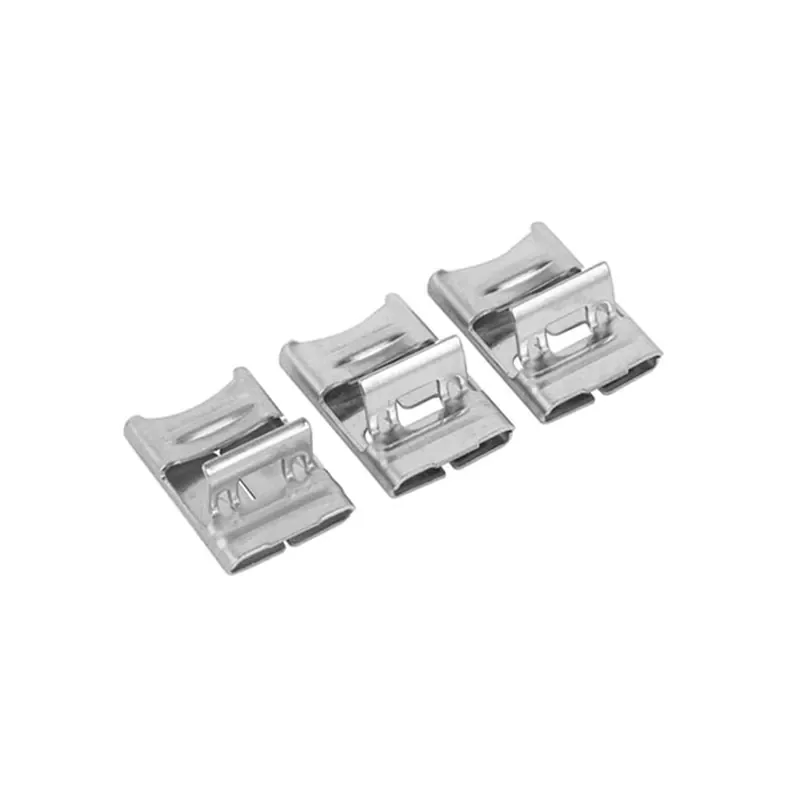
The Buckle Can Be the Weakest Point
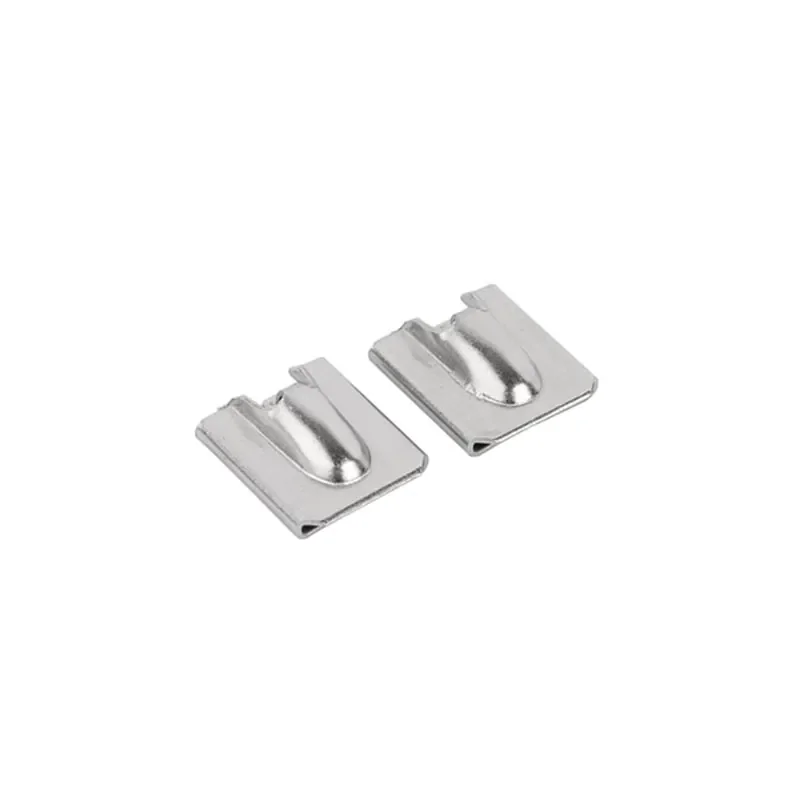
The buckle is a critical component of many stainless steel strapping systems.
After the band is wrapped around an object, the buckle holds the band in its final position. If the buckle is poorly matched to the band or installed incorrectly, the overall fastening strength can be reduced.
The buckle should match the band width and thickness and should be designed for the intended application.
For demanding installations, buyers should ask the supplier for information about the holding strength or performance of the complete band-and-buckle system rather than relying only on the raw material specifications.
How Installation Tension Affects Strength
Proper tension is essential for achieving reliable fastening performance.
During installation, the band is tensioned around the object to remove slack and create a secure connection. Insufficient tension can allow the secured component to move, while excessive tension can deform the band, damage the supporting structure, or place unnecessary stress on the buckle.
A suitable tensioning tool can help installers achieve more consistent results.
For large-scale projects, using the correct tool and following the manufacturer’s installation recommendations can significantly improve consistency from one fastening point to another.
Load Capacity vs. Working Load
It is important to distinguish between ultimate strength and working load.
Ultimate strength refers to the point at which a component or system fails under a specified test condition. A working load is the load that can be applied during normal operation while maintaining an appropriate safety margin.
A stainless steel band should not be operated continuously at its ultimate tensile strength.
The appropriate working load depends on the complete fastening system, application conditions, installation method, and required safety factor. For critical installations, buyers should obtain application-specific recommendations and test data from the manufacturer.
How Load Direction Affects Performance
The way a force is applied can influence the performance of stainless steel banding.
A band wrapped around a pole may experience forces caused by the weight of the mounted equipment, wind, vibration, impact, or movement. These forces may act in different directions rather than simply pulling directly against the band.
For example, equipment mounted outdoors may experience additional wind loads that are not obvious from its static weight alone.
Therefore, load calculations should consider the actual forces acting on the installation rather than relying only on the weight of the secured object.
Stainless Steel Banding for Pole Mounting
Pole mounting is a common application for stainless steel band and straps.
The band can be wrapped around utility poles, telecommunications poles, lighting structures, and other supports to secure brackets, signs, cable accessories, enclosures, and equipment.
In these applications, the band must resist not only the weight of the equipment but also environmental forces such as wind, vibration, temperature changes, and long-term corrosion.
The appropriate band width, thickness, stainless steel grade, buckle, and installation tension should therefore be selected according to the specific mounting requirements.
Stainless Steel Banding for Cable Management
Stainless steel banding can also be used to secure and organize cables, conduits, and electrical components.
For cable management, excessive tension should be avoided because it can damage cables or their outer insulation. The band should secure the cable bundle without creating unnecessary pressure.
In outdoor electrical and telecommunications applications, corrosion resistance is also important because the fastening system may remain exposed to weather for many years.
This means that selecting the appropriate band strength is only part of the overall design. Installation technique and protection of the supported cables are equally important.
Stainless Steel Banding for Pipe and Equipment Fastening
Stainless steel bands can be used to secure pipes, sensors, brackets, signs, and industrial equipment to supporting structures.
The required band strength depends on the size and weight of the component as well as vibration and environmental forces.
For heavier equipment, a wider or thicker band may be required. The buckle and supporting structure must also be capable of handling the expected load.
The fastening system should be designed so that the load is distributed appropriately rather than concentrated at a single weak point.
How Corrosion Can Affect Long-Term Strength
Corrosion resistance is closely related to long-term mechanical performance.
Even if a stainless steel band has sufficient strength when new, corrosion can gradually reduce its effective cross-section or damage the locking components in unsuitable environments.
This is one reason stainless steel is widely used for long-term outdoor fastening.
304 stainless steel can perform well in many general environments, while 316 stainless steel may provide additional protection where chloride exposure is significant.
Choosing the appropriate grade can help preserve the mechanical performance of the band throughout its intended service life.
Stainless Steel Band and Straps for Harsh Environments
In harsh environments, buyers should evaluate more than the initial tensile strength of the band.
Factors such as salt spray, humidity, chemicals, temperature fluctuations, vibration, and UV exposure can influence long-term performance.
For marine and coastal installations, 316 stainless steel is often considered because of its improved resistance to chloride exposure.
For industrial environments, the specific chemicals and operating conditions should be reviewed before selecting the material grade.
The goal is to ensure that the band maintains both its structural and corrosion-resistant properties throughout the expected service life.
How to Select the Right Stainless Steel Band Strength
A practical selection process starts with identifying the actual application requirements.
First, determine the weight and dimensions of the component being secured. Then consider additional forces such as wind, vibration, impact, or movement.
Next, select the appropriate stainless steel grade, band width, and thickness. The buckle and installation tool should be compatible with these specifications.
Finally, review the manufacturer’s technical data and recommended working conditions. For critical applications, application-specific calculations or testing may be necessary.
Instead of selecting a band based solely on the highest available tensile strength, choose a complete system that provides an appropriate safety margin for the actual application.
What Information Should You Ask the Supplier For?
When purchasing stainless steel band and straps for applications where load capacity matters, buyers should request clear technical information.
Important information may include:
Stainless steel grade
Band width and thickness
Tensile strength
Recommended installation tension
Buckle specifications
Holding or connection strength
Applicable test standards
Recommended working conditions
Available quality documentation
Providing the supplier with information about the application can also help them recommend a suitable band and buckle combination.
Why the Complete System Matters
The performance of stainless steel banding is determined by its weakest component.
A high-strength stainless steel band cannot compensate for an unsuitable buckle, poor installation, inadequate supporting structure, or incorrect tension.
For this reason, the band, buckle, installation tool, and mounting structure should be considered together.
This system-based approach is particularly important for telecommunications infrastructure, electrical equipment, pole mounting, industrial machinery, and other applications where fastening failure could cause equipment damage or safety problems.
Conclusion
So, how strong are stainless steel band and straps? The answer depends on the complete fastening system and application conditions.
Stainless steel banding can provide high mechanical strength and reliable long-term fastening when the appropriate material grade, width, thickness, buckle, and installation method are selected. However, tensile strength alone does not define the safe working capacity of an installed system.
For reliable performance, buyers should consider the expected load, load direction, environmental conditions, installation tension, buckle strength, and required safety margin. 304 stainless steel is suitable for many general applications, while 316 stainless steel may be preferable where chloride and marine exposure are significant.
By evaluating the complete system rather than the band alone, users can select stainless steel band and straps that provide the required strength, durability, and long-term fastening performance.
FAQ
How strong are stainless steel band and straps?
Stainless steel band and straps can provide high tensile strength, but their actual load capacity depends on the stainless steel grade, band width, thickness, buckle, installation tension, and application conditions.
Does thicker stainless steel band mean higher strength?
Generally, increasing band thickness can improve resistance to stretching and deformation. However, the correct thickness depends on the application because excessive thickness can increase cost and make installation more difficult.
Does wider stainless steel band have higher load capacity?
A wider band can provide greater contact area and may improve resistance to deformation. However, actual load capacity also depends on thickness, material properties, buckle strength, and installation conditions.
Is 316 stainless steel stronger than 304 stainless steel?
Not necessarily. The main advantage of 316 stainless steel is its improved corrosion resistance, particularly against chloride exposure. Mechanical strength depends on the specific material specification and product condition.
What is the difference between tensile strength and working load?
Tensile strength describes the material’s resistance to failure under tension, while working load refers to the load that can be applied during normal use with an appropriate safety margin. They should not be treated as the same value.
Does the buckle affect stainless steel band strength?
Yes. The buckle and locking mechanism can be a limiting factor in the overall fastening system. The band and buckle should be selected as compatible components.
How do I calculate the required stainless steel band strength?
Consider the weight of the secured component and additional forces such as wind, vibration, impact, and movement. Then apply an appropriate safety factor and verify the band, buckle, and supporting structure against the required load.
What stainless steel band is best for heavy-duty applications?
Heavy-duty applications may require wider or thicker stainless steel band with suitable tensile properties and a compatible high-strength buckle. The exact specification should be selected according to the application and manufacturer’s technical data.
Can stainless steel banding be used for outdoor pole mounting?
Yes. Stainless steel banding is commonly used for pole mounting. The band should be selected based on the equipment weight, environmental loads, pole conditions, and required service life.
How can I ensure stainless steel banding remains strong over time?
Choose an appropriate stainless steel grade for the environment, use compatible buckles and tools, apply the recommended installation tension, and inspect critical installations when necessary. Proper material selection and installation help maintain long-term performance.