



How to Choose a Stainless Steel Band and Straps Supplier
Introduction
Stainless steel band and straps are widely used for pole mounting, cable management, pipe fastening, signage, telecommunications, electrical installations, and industrial equipment. They are valued for their strength, corrosion resistance, and ability to provide secure fastening in demanding indoor and outdoor environments.
However, the performance of stainless steel banding depends not only on the material itself but also on the quality and reliability of the supplier. Differences in stainless steel grade, band dimensions, manufacturing tolerances, surface quality, packaging, and buckle compatibility can directly affect installation efficiency and long-term performance.
For distributors, contractors, and industrial buyers, choosing the right stainless steel band and straps supplier is therefore an important part of the procurement process. This guide explains the key factors to consider when evaluating potential suppliers.

Understand Your Stainless Steel Banding Requirements
Before comparing suppliers, it is important to define the requirements of your application. Different projects may need different stainless steel grades, band widths, thicknesses, lengths, and surface finishes.
For example, a general outdoor fastening application may use 304 stainless steel, while installations in coastal or marine environments may require 316 stainless steel for improved resistance to chloride exposure.
The required band dimensions also depend on the application. Wider or thicker bands may be suitable for heavier-duty fastening, while narrower bands can be more practical for smaller cables, signs, or accessories.
Having these specifications clearly defined makes it easier to compare suppliers and prevents purchasing products that are unsuitable for the intended application.
Check the Stainless Steel Grade
Material quality should be one of the first factors to evaluate when choosing a supplier.
304 stainless steel is widely used because it provides a good combination of corrosion resistance, mechanical strength, durability, and cost. It is suitable for many general industrial and outdoor applications.
316 stainless steel contains molybdenum and generally offers better resistance to chlorides and certain corrosive environments. It can be a better choice for marine, coastal, chemical, and other demanding applications.
A reliable supplier should clearly identify the stainless steel grade used in its bands and straps. Buyers should also ask whether material certificates or relevant inspection documentation can be provided when required.
Avoid suppliers that provide unclear material descriptions or cannot confirm the actual stainless steel grade of their products.
Evaluate Product Specifications and Manufacturing Consistency
A professional stainless steel band and straps supplier should be able to provide detailed product specifications, including band width, thickness, length, material grade, surface condition, and packaging.
Manufacturing consistency is equally important. Stainless steel banding is often used with buckles and tensioning tools, so dimensional consistency helps ensure smooth installation.
For large-volume orders, even relatively small differences in thickness or width can affect production efficiency and product performance. A supplier with stable manufacturing processes should be able to maintain consistent specifications across different production batches.
Buyers should therefore look beyond a single sample and consider whether the supplier can maintain consistent quality during repeated orders.
Consider Surface Quality and Edge Finishing
Surface quality is another factor that should not be overlooked. Stainless steel bands should have a suitable surface finish without excessive scratches, contamination, deformation, or other defects that could affect their use.
The edges also deserve attention. Poorly finished edges can create handling difficulties and may increase the risk of cuts during installation or maintenance.
A supplier with appropriate slitting, cutting, deburring, and finishing processes can provide more consistent products for professional installation.
For applications where appearance matters, such as signage or visible architectural installations, surface appearance may be an additional consideration when selecting a supplier.
Check Buckle and Accessory Compatibility
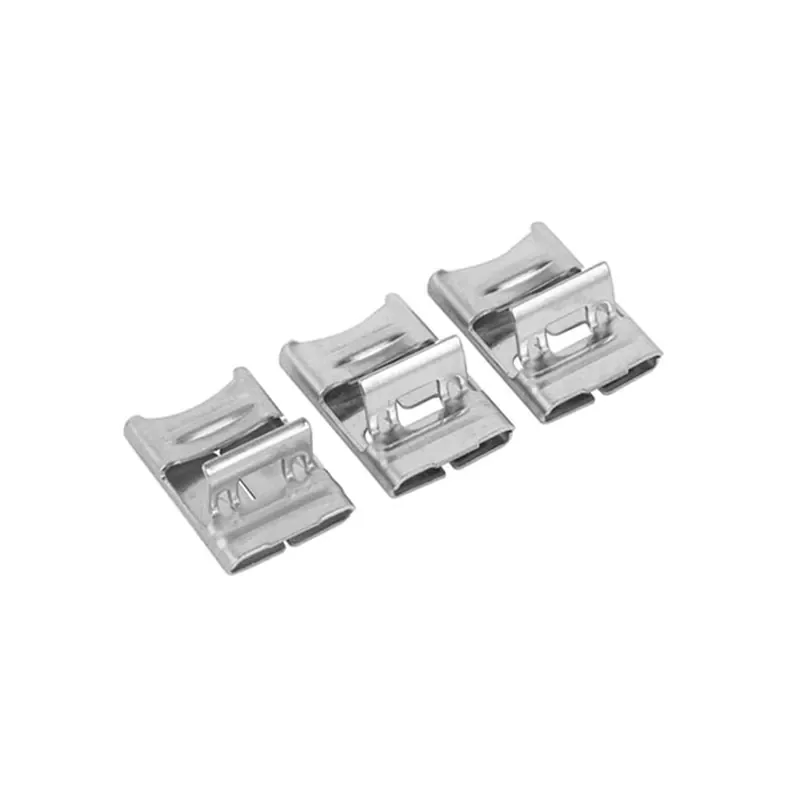
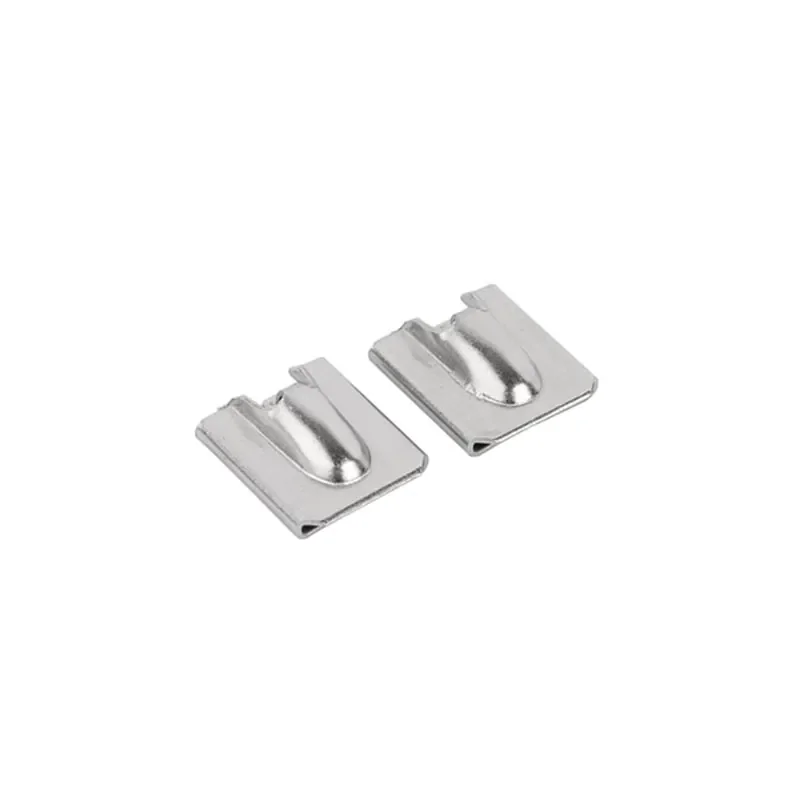
Stainless steel bands are often used as part of a complete fastening system. Depending on the application, this system may include stainless steel buckles, seals, clamps, tensioning tools, and other accessories.
When selecting a supplier, check whether the company can provide compatible buckles and accessories. Purchasing compatible components from the same supplier can simplify procurement and reduce the risk of mismatched dimensions.
For example, the buckle should be suitable for the selected band width and thickness. The installation tool should also be compatible with the banding system and provide the required tensioning and cutting functions.
A supplier capable of providing a complete system may offer greater convenience than a supplier that only provides stainless steel banding material.
Review Quality Control Procedures
Quality control is particularly important for stainless steel band and straps because these products may be used in outdoor infrastructure and long-term industrial installations.
A reliable supplier should have defined quality control procedures covering incoming raw materials, production, dimensional inspection, surface quality, and final packaging.
For larger orders, buyers can ask about inspection procedures and quality documentation. Depending on the project, this may include material certificates, dimensional inspection reports, or other relevant documentation.
The supplier should also have a clear process for handling non-conforming products and customer quality claims.
Look at Production Capacity
Production capacity becomes especially important when purchasing stainless steel banding in large quantities or on a regular basis.
A supplier may be able to produce high-quality samples but still struggle to maintain delivery schedules when order volumes increase. Buyers should therefore consider the supplier’s manufacturing capacity, equipment, workforce, production planning, and inventory management.
If the supplier has sufficient capacity and established production processes, it is more likely to support stable supply for long-term projects.
For distributors, this is particularly important because stock availability can directly affect customer delivery times.
Consider Customization Capabilities
Standard stainless steel band sizes can meet many common applications, but some projects require customized specifications.
Depending on the supplier’s capabilities, customization may include band width, thickness, length, packaging, surface finish, marking, or other product requirements.
If you regularly purchase products for different applications, a supplier with flexible manufacturing capabilities can make it easier to develop suitable specifications without changing suppliers for every project.
Before placing a customized order, confirm minimum order quantities, tooling requirements, production lead times, sample approval procedures, and packaging requirements.
Evaluate Packaging and Shipping
Packaging is another practical factor that can affect the purchasing experience.
Stainless steel bands and straps should be packaged in a way that protects them from deformation, contamination, moisture, and damage during transportation. Coils, rolls, or cut-length straps may require different packaging methods depending on their size and application.
For export orders, the supplier should also have experience with international packaging and shipping requirements. Clear labeling can make warehouse handling and inventory management easier for distributors.
A supplier that pays attention to packaging can help reduce damage and handling problems after the products leave the factory.
Compare Pricing Without Choosing the Cheapest Supplier
Price is an important consideration, but the lowest quotation does not necessarily represent the best value.
A cheaper stainless steel band may use a different material grade, have less consistent dimensions, thinner material, or provide lower overall quality. These differences may not be obvious from a quotation alone.
Instead of comparing price only, buyers should evaluate the overall value, including material quality, product consistency, manufacturing capacity, packaging, delivery reliability, customization, and after-sales service.
For long-term projects, a slightly higher unit price may be worthwhile if it provides more reliable performance and reduces installation or replacement problems.
Check Supplier Experience and Market Applications
Experience in relevant applications can be a useful indicator when evaluating a stainless steel band and straps supplier.
A supplier that regularly serves telecommunications, electrical, utility, industrial, construction, or outdoor infrastructure customers may have a better understanding of the requirements associated with these applications.
It is also useful to ask what markets the supplier serves and whether it has experience with international export orders. Familiarity with different customer requirements can make communication, documentation, packaging, and delivery more efficient.
Rather than focusing only on how many years a company has been in business, consider whether its experience is relevant to your specific stainless steel banding requirements.
Assess Communication and Customer Service
Good communication can make a significant difference during product selection and order management.
A professional supplier should be able to answer questions about material grades, specifications, production lead times, packaging, quality control, and compatibility with accessories.
Communication is especially important for customized orders. Technical drawings, specifications, samples, and packaging requirements should be confirmed before production begins.
Fast and accurate communication can reduce misunderstandings and help prevent delays caused by incorrect specifications.
Request Samples Before a Large Order
When evaluating a new supplier, requesting samples can be a practical way to assess product quality before placing a large order.
Samples can be checked for material identification, dimensions, surface finish, edge condition, flexibility, and compatibility with the intended buckle or installation tool.
If possible, testing the samples in the actual application can provide additional information about installation efficiency and fastening performance.
A supplier that is confident in its products should generally be willing to discuss sample requirements and testing procedures with potential customers.
Questions to Ask a Stainless Steel Band and Straps Supplier
Before making a final purchasing decision, buyers can ask the supplier several key questions:
What stainless steel grades are available?
What widths, thicknesses, and lengths can you supply?
Can you provide material or quality documentation?
Are matching stainless steel buckles and accessories available?
What quality control procedures are used during production?
What is the standard production lead time?
What is the minimum order quantity?
Can you provide customized specifications or packaging?
How are the products packaged for export?
Can you provide samples before a bulk order?
What markets and applications do you currently serve?
The answers to these questions can help buyers distinguish between a basic product reseller and a supplier with stronger manufacturing and quality control capabilities.
Stainless Steel Band and Straps Supplier vs. Manufacturer
Buyers should also consider whether they need a manufacturer, distributor, or trading company.
A manufacturer may provide greater control over material selection, production specifications, customization, quality control, and lead times. This can be particularly valuable for OEM projects and large-volume orders.
A distributor may be more suitable when buyers need smaller quantities, multiple brands, or fast access to standard products.
There is no single best option for every buyer. The right choice depends on order volume, customization requirements, delivery expectations, and technical requirements.
How to Choose the Right Supplier
A good stainless steel band and straps supplier should provide more than a competitive quotation. The supplier should be able to demonstrate reliable material quality, consistent manufacturing, suitable product specifications, compatible accessories, stable production capacity, and dependable delivery.
For demanding applications, buyers should pay particular attention to stainless steel grade, band dimensions, surface and edge quality, buckle compatibility, and quality control.
It is also useful to evaluate communication, customization capabilities, packaging, and after-sales support before establishing a long-term supplier relationship.
By comparing these factors systematically, buyers can select a stainless steel banding supplier that provides reliable products and stable support for current and future projects.
Conclusion
Choosing the right stainless steel band and straps supplier requires more than comparing product prices. Material grade, dimensional consistency, manufacturing quality, buckle compatibility, production capacity, customization, packaging, and customer service can all influence the overall value of a supplier.
For general applications, 304 stainless steel may provide a practical balance of performance and cost, while 316 stainless steel can be more suitable for demanding corrosive environments. Regardless of the grade selected, working with a supplier that can maintain consistent quality and provide appropriate documentation is essential.
By defining your requirements, checking supplier capabilities, requesting samples, and evaluating total value rather than price alone, you can build a more reliable supply chain for stainless steel band and straps.
FAQ
What should I consider when choosing a stainless steel band and straps supplier?
Consider stainless steel grade, band dimensions, manufacturing consistency, surface quality, quality control, production capacity, customization, packaging, delivery time, and customer service.
Is 304 or 316 stainless steel better for banding?
304 stainless steel is suitable for many general applications, while 316 stainless steel provides better resistance to chloride exposure and is often preferred for marine, coastal, and highly corrosive environments.
Can a stainless steel band supplier provide buckles?
Many professional suppliers can provide compatible stainless steel buckles and other accessories. Buying compatible components from one supplier can simplify procurement and installation.
Should I request samples before placing a bulk order?
Yes. Samples allow buyers to check dimensions, surface quality, material specifications, and compatibility with buckles and installation tools before committing to a large order.
What stainless steel band specifications should I provide to a supplier?
At minimum, provide the required stainless steel grade, band width, thickness, length, application, estimated quantity, and packaging requirements. Customized projects may require additional technical specifications.
How can I compare stainless steel band suppliers?
Compare suppliers based on total value rather than price alone. Product quality, material traceability, production capacity, delivery reliability, customization, documentation, and after-sales service should all be considered.
Can stainless steel band and straps be customized?
Depending on the manufacturer’s capabilities, customization may be available for width, thickness, length, packaging, surface finish, marking, and other specifications. Buyers should confirm minimum order quantities and lead times in advance.