



Heavy-Duty Strapping: Reinforced Tension Tool vs. Conventional Tension Tools
Introduction
Heavy-duty strapping plays an important role in securing industrial products during handling, storage, and transportation. Steel products, pipes, construction materials, timber, machinery components, pallets, and other heavy loads often require reliable straps and appropriate tensioning equipment to maintain load stability.
While the strap itself is essential, the tensioning tool also has a direct impact on packaging quality. The right tool helps operators apply sufficient and consistent tension without unnecessary physical effort. However, not all tensioning tools are designed for the same working conditions.
A Reinforced Tension Tool is developed for demanding strapping applications where durability, tension capacity, and repeated operation are important. Conventional tension tools, on the other hand, may be suitable for lighter or less frequent packaging tasks.
So, which option is better for heavy-duty strapping?
The answer depends on the strap material, load requirements, packaging volume, required tension, and operating environment. This guide compares reinforced and conventional tension tools to help businesses select the right solution for industrial packaging.
What Is a Conventional Tension Tool?
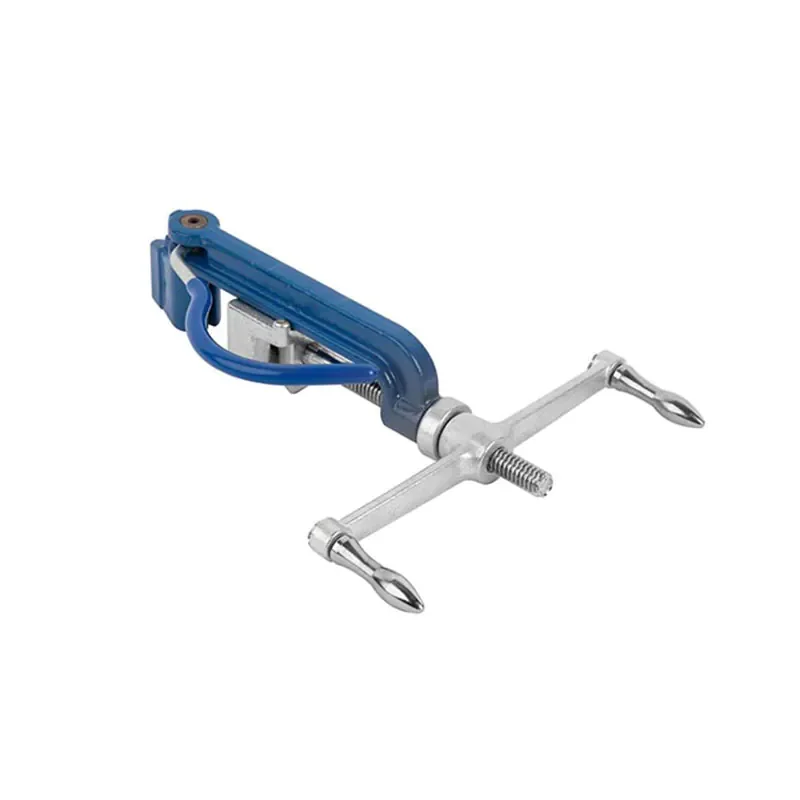
A conventional tension tool is a manual device used to tighten packaging straps around cartons, bundles, pallets, and other loads.
It typically uses a mechanical mechanism to help the operator generate strap tension. Compared with pulling a strap completely by hand, a conventional tension tool provides better control and can reduce the amount of physical force required.
Conventional tools are often suitable for general packaging applications where the loads are relatively light or medium in weight and the operating frequency is moderate.
They can be a practical choice for warehouses, distribution centers, small manufacturing operations, and businesses that perform manual strapping on an occasional basis.
However, conventional tools may not always provide the durability or performance required for continuous heavy-duty applications.
What Is a Reinforced Tension Tool?
A Reinforced Tension Tool is a heavy-duty manual strapping tool designed for more demanding packaging operations.
Its reinforced construction is intended to withstand greater mechanical stress and repeated use. Depending on the specific model, it may be compatible with industrial strapping materials such as steel, PET, or other heavy-duty straps.
The tool provides mechanical assistance during tensioning, allowing operators to tighten straps with greater control while reducing dependence on physical strength.
For businesses handling heavy or irregular loads, a reinforced tension tool can provide a practical combination of strength, portability, and operational flexibility.
Reinforced Tension Tool vs. Conventional Tension Tool
The most important differences are related to construction, workload, durability, tension requirements, and application range.
1. Construction and Durability
A conventional tension tool is generally designed for standard packaging workloads. Its construction may be sufficient for occasional or moderate use.
A reinforced tension tool is designed with demanding applications in mind. Its stronger structure can provide better resistance to mechanical stress during repetitive tensioning operations.
This makes reinforced models particularly useful in industrial environments where tools may be used continuously throughout the working day.
For heavy-duty packaging, durability should be evaluated according to the actual workload rather than simply the tool’s appearance or purchase price.
2. Tension Capacity
The required strap tension varies significantly between packaging applications.
A lightweight carton may require relatively low tension, while steel pipes, metal products, machinery components, or construction materials may require considerably higher tension.
Conventional tension tools can be suitable when the required tension falls within their specified operating range.
For heavier applications, a Reinforced Tension Tool may provide a more appropriate solution because it is designed to handle demanding tensioning requirements.
However, users should always follow the manufacturer’s specified tension range. Selecting the strongest possible tool does not necessarily produce better packaging. The goal is to apply the correct amount of tension for the strap and load.
3. Heavy-Duty Application Suitability
Application requirements are one of the clearest differences between the two types of tools.
Conventional tension tools are often suitable for:
Cartons
Light pallets
General warehouse packaging
Small bundles
Occasional strapping
Reinforced tension tools are generally better suited to demanding applications such as:
Steel products
Metal pipes and tubes
Construction materials
Heavy pallets
Timber and lumber
Machinery components
Industrial equipment
Large bundled products
The exact application range depends on the tool specification and compatible strap.
4. Repetitive Operation
The frequency of use should also influence the choice of tensioning equipment.
If an operator only needs to strap a few packages each day, a conventional tension tool may provide sufficient performance.
However, when dozens or hundreds of loads need to be secured every day, the tool is exposed to significantly more mechanical stress.
A reinforced tension tool can be a better choice for repetitive industrial operations because its construction is intended to support demanding workloads.
This can also help reduce the risk of premature tool wear and unnecessary downtime.
5. Operator Effort
Both conventional and reinforced tension tools reduce the physical effort required compared with completely manual strapping.
However, heavy-duty applications often require greater tension. Applying high tension repeatedly can place additional physical demands on operators.
A properly selected Reinforced Tension Tool provides mechanical assistance while allowing the operator to maintain better control over the tightening process.
This can make repetitive strapping tasks more manageable and may contribute to more consistent operator performance.
6. Tension Consistency
Consistent tension is essential for load stability.
If the strap is too loose, the load may move during transportation. If the tension is excessive, the strap, carton, or product may be damaged.
Manual tensioning without suitable equipment can produce significant differences between operators.
Both conventional and reinforced tension tools can improve consistency compared with pulling straps entirely by hand. However, a reinforced tool is generally more suitable when consistent tension must be maintained during heavy-duty or high-volume operations.
The final result still depends on correct tool selection, operator training, strap quality, and proper fastening.
Comparison Table
| Factor | Conventional Tension Tool | Reinforced Tension Tool |
| Typical workload | Light to medium | Medium to heavy |
| Heavy-duty applications | Limited | Excellent suitability |
| Construction | Standard | Reinforced |
| Durability | Moderate | High |
| Repetitive operation | Suitable for moderate use | Better for demanding use |
| Tension requirements | Low to medium | Medium to high, depending on model |
| Operator effort | Reduced | Reduced further for demanding applications |
| Portability | Excellent | Excellent |
| Initial cost | Generally lower | Generally higher |
| Best application | General packaging | Industrial and heavy-duty strapping |
The table provides a general comparison. Actual performance depends on the specifications and design of each individual tool.
When Should You Choose a Conventional Tension Tool?
A conventional tension tool can be the right choice when your packaging requirements are relatively simple.
It may be appropriate if your business handles lightweight or medium-weight products, performs strapping occasionally, or has relatively low packaging volumes.
For example, a warehouse that secures several pallets per day may not need a reinforced model if the required strap tension is within the capacity of a standard tool.
The lower initial equipment cost can also make conventional tools attractive for businesses with limited packaging requirements.
In these situations, purchasing a heavy-duty tool may provide little additional value.
When Should You Choose a Reinforced Tension Tool?
A Reinforced Tension Tool becomes more valuable when packaging operations involve heavy loads, high tension, or frequent use.
It is particularly worth considering when:
Heavy industrial products need to be secured
Operators perform repetitive strapping throughout the day
High strap tension is required
Standard tools experience excessive wear
Packaging consistency is important
The working environment is demanding
Portability is still required
For industrial manufacturers and logistics operations, the ability to combine heavy-duty performance with manual portability can be a major advantage.
How to Choose the Right Reinforced Tension Tool
Selecting a reinforced model should not be based only on the word “heavy-duty.” Several technical factors should be evaluated.
Check Strap Material
First, determine whether you are using steel, PET, PP, or another type of strap.
Different strap materials have different strength and flexibility characteristics. The tensioning tool must be compatible with the specific strap material.
Check Strap Width and Thickness
Strap dimensions are equally important.
Before purchasing a tool, confirm the supported strap width and thickness. Using a strap outside the recommended range can result in poor tensioning performance or damage to the tool.
Evaluate Tension Capacity
Determine the approximate tension required for your typical loads.
Consider product weight, load shape, packaging configuration, transportation conditions, and the strength of the selected strap.
Choose a tool with an appropriate working range rather than simply selecting the highest tension capacity available.
Consider Daily Packaging Volume
Packaging volume is an important indicator of whether a reinforced model is justified.
For occasional work, a conventional tool may be sufficient. For high-volume industrial packaging, the additional durability and reinforced construction can provide greater long-term value.
Evaluate Ergonomics
A heavy-duty tool should still be comfortable to operate.
Pay attention to handle design, grip, weight, balance, and operating movement. Ergonomic design can help reduce fatigue during repetitive work.
Consider Maintenance Requirements
Regular maintenance can help preserve tool performance.
Before purchasing, check how easily the tool can be cleaned, lubricated, adjusted, and serviced. Replacement parts and after-sales support should also be considered for long-term industrial use.
Common Heavy-Duty Strapping Applications
Reinforced tension tools can be used across many industrial sectors.
Steel and Metal Products
Steel coils, sheets, bars, pipes, and other metal products may require strong strapping to remain stable during handling and transportation.
Construction Materials
Construction materials such as pipes, profiles, lumber, and structural components often need to be bundled securely before transportation.
Manufacturing
Manufacturers may use heavy-duty strapping to secure machinery components, fabricated products, equipment, and other industrial goods.
Warehousing and Logistics
Large warehouses and logistics companies may need portable tensioning tools to secure palletized products at different packaging stations.
Timber and Lumber
Long or irregularly shaped timber products can benefit from strong and consistent strapping to prevent movement during transportation.
Advantages of Using a Reinforced Tension Tool for Heavy-Duty Strapping
The main advantage is improved suitability for demanding working conditions.
A reinforced tool can provide:
Greater durability: Reinforced construction is designed to handle repeated mechanical stress.
Better control: Mechanical tensioning provides more controlled strap tightening.
Reduced physical effort: Operators do not need to rely entirely on hand strength.
Improved consistency: Controlled tensioning can help standardize packaging results.
Greater productivity: Efficient tensioning can reduce the time required for repetitive packaging operations.
Portability: Unlike fixed automated systems, manual tools can be moved easily between packaging areas.
Is a Reinforced Tension Tool Always Better?
Not necessarily.
A reinforced tension tool is designed for demanding applications, but that does not mean it is the best choice for every packaging operation.
If a business only handles lightweight products and straps a small number of packages each day, a conventional tension tool may be more economical.
The key is to match the tool with the actual application.
Choosing an unnecessarily heavy-duty tool can increase initial costs without providing meaningful operational benefits. On the other hand, using a conventional tool for demanding industrial applications may result in faster wear, inconsistent tension, or reduced productivity.
Best Practices for Heavy-Duty Strapping
Regardless of the tool selected, proper operating procedures are essential.
First, make sure the strap is suitable for the load and transportation conditions. Position the strap correctly around the product and ensure that it is properly aligned before tensioning.
During tensioning, apply controlled force and remain within the recommended capacity of both the strap and tool.
Avoid excessive tension. More tension does not automatically mean better packaging. Over-tensioning can damage the strap, packaging material, or product.
After securing the strap, inspect the connection and confirm that the load is stable before transportation.
Regularly inspect the tensioning tool for wear, contamination, loose components, or other signs of damage. Proper maintenance can help extend tool life and maintain consistent performance.
Conclusion
When comparing a Reinforced Tension Tool vs. Conventional Tension Tools, the best choice depends on the actual packaging requirements.
Conventional tension tools can be a practical and economical solution for light- to medium-duty applications, occasional packaging, and lower workloads.
A Reinforced Tension Tool is generally better suited to heavy-duty industrial strapping where higher tension, repetitive operation, durability, and consistent performance are important.
For businesses securing steel products, pipes, construction materials, machinery components, heavy pallets, or other demanding loads, investing in a reinforced tool can provide greater reliability and long-term value.
The most effective selection approach is to evaluate strap material, strap dimensions, required tension, load type, packaging volume, operating frequency, ergonomics, durability, and maintenance requirements together.
By matching the tensioning tool to the actual application, businesses can improve packaging efficiency, reduce operator effort, and achieve more reliable load security.
FAQ
What is the difference between a Reinforced Tension Tool and a conventional tension tool?
A Reinforced Tension Tool is designed for more demanding applications and typically features stronger construction and greater durability. Conventional tension tools are generally intended for light- to medium-duty packaging.
Is a Reinforced Tension Tool suitable for steel strapping?
Some reinforced tension tools are specifically designed for steel strapping. However, compatibility depends on the model, so users should always check the manufacturer’s specifications for strap material, width, thickness, and tension capacity.
When should I use a Reinforced Tension Tool?
A reinforced model is suitable when packaging involves heavy loads, high strap tension, repetitive operation, or demanding industrial conditions.
Can a Reinforced Tension Tool improve packaging efficiency?
Yes. By providing mechanical assistance during tensioning, it can reduce operator effort, improve tension consistency, and speed up repetitive strapping operations.
Is a conventional tension tool suitable for industrial packaging?
Yes, depending on the application. Conventional tools can be suitable for light- or medium-duty industrial packaging when the required tension and workload remain within the tool’s specifications.
How do I select the right Reinforced Tension Tool?
Consider the strap material, strap width and thickness, required tension, load weight and configuration, packaging volume, operating frequency, ergonomics, durability, and maintenance requirements.
Does a stronger tension tool always provide better results?
No. The tool should match the strap and application. Excessive tension can damage the strap or load, so the correct working range is more important than simply choosing the strongest tool.