



How Ball Lock Type Buckles Improve the Performance of Stainless Steel Banding Systems
Introduction
Stainless steel banding systems are widely used in industries that require strong, reliable, and long-lasting fastening solutions. From telecommunications and power utilities to transportation and industrial equipment installation, stainless steel bands provide excellent strength for securing cables, pipes, poles, and various components.
However, the performance of a stainless steel banding system depends not only on the quality of the band itself but also on the buckle that locks and maintains the connection. A weak or unreliable buckle can reduce the overall holding strength and affect the stability of the entire fastening system.
Ball Lock Type Buckles are designed to improve the reliability and efficiency of stainless steel banding systems. With their unique locking mechanism, strong holding force, and easy installation features, they provide a secure connection for demanding applications.
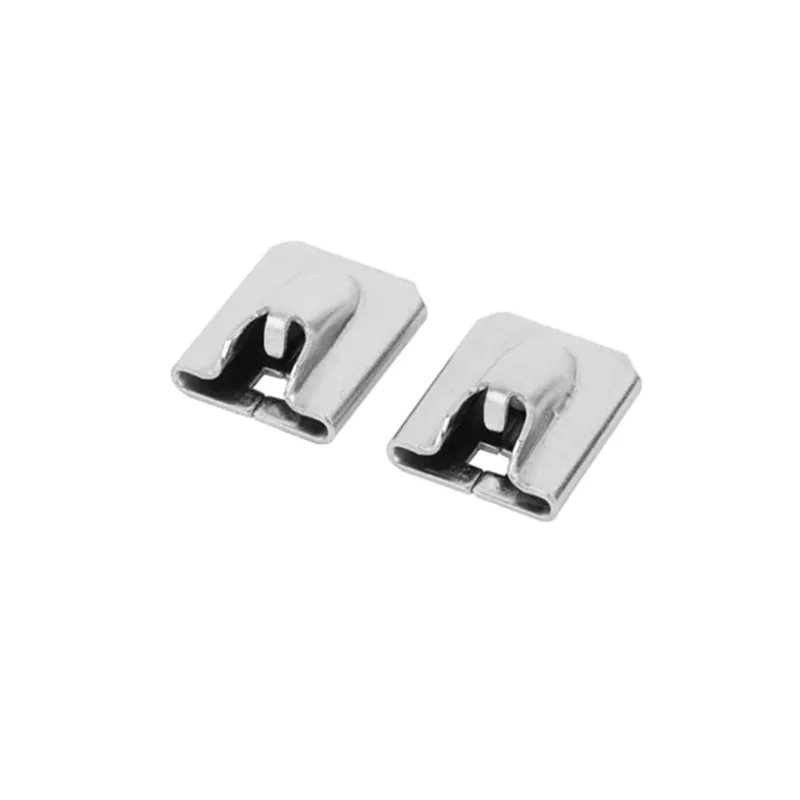
Understanding Ball Lock Type Buckles
What Are Ball Lock Type Buckles?
Ball Lock Type Buckles are fastening components designed to secure stainless steel bands by using a ball locking mechanism. During installation, the stainless steel band passes through the buckle, and the internal ball structure grips the band tightly to create a secure connection.
Unlike traditional fastening methods that rely mainly on bending or crimping, ball lock buckles provide a mechanical locking system that improves connection stability.
They are commonly used with stainless steel banding systems for:
Cable management
Pole mounting
Pipe fastening
Sign installation
Industrial applications
How Do Ball Lock Type Buckles Work?
The working principle of a ball lock type buckle is based on a self-locking mechanism.
When the stainless steel band is inserted into the buckle and tension is applied, the internal ball moves into a locking position. This prevents the band from slipping backward and maintains consistent fastening force.
The locking design provides:
Strong grip on the stainless steel band
Stable connection under tension
Improved resistance to vibration
Reliable long-term performance
This makes ball lock type buckles suitable for applications where secure fastening is critical.
Challenges of Traditional Stainless Steel Banding Systems
Insufficient Locking Strength
The buckle is one of the most important components in a banding system. If the buckle cannot provide sufficient locking force, the stainless steel band may loosen over time.
This can result in:
Reduced equipment stability
Cable movement
Increased maintenance requirements
A reliable locking mechanism is essential for maintaining long-term fastening performance.
Performance Problems in Harsh Environments
Outdoor and industrial applications often expose banding systems to:
Moisture
Salt spray
Temperature changes
Vibration
Chemical exposure
If the buckle material or locking structure is not suitable for harsh environments, the entire fastening system may experience reduced durability.
Difficult Installation Processes
Some traditional buckle designs require complicated installation procedures or special tools, which can increase labor time and installation costs.
For large-scale projects, installation efficiency is an important factor when selecting fastening components.
How Ball Lock Type Buckles Improve Stainless Steel Banding Systems
Provide Strong and Reliable Locking Performance
The biggest advantage of ball lock type buckles is their secure locking mechanism.
The internal ball structure creates a strong grip on the stainless steel band, preventing unwanted movement after installation.
This improves:
Holding strength
Connection stability
Resistance to pulling forces
Long-term reliability
For applications requiring permanent or heavy-duty fastening, ball lock type buckles provide dependable performance.
Improve Installation Efficiency
Ball lock type buckles are designed for quick and convenient installation.
Compared with some traditional fastening methods, they allow operators to complete installation more efficiently while maintaining reliable locking performance.
Benefits include:
Faster installation process
Reduced labor requirements
Easier operation in field applications
Improved project efficiency
This is especially valuable for telecommunications, utility, and construction projects.
Enhance Resistance to Vibration and Movement
Equipment installed outdoors or in industrial environments may experience continuous vibration and mechanical movement.
Ball lock type buckles help maintain a stable connection by securely locking the stainless steel band in place.
This makes them suitable for applications such as:
Pole-mounted equipment
Transportation infrastructure
Industrial machinery
Communication systems
Maintain Stable Performance in Harsh Conditions
High-quality ball lock type buckles are usually manufactured from corrosion-resistant materials such as stainless steel.
Their durability helps them withstand:
Rain and humidity
Coastal salt exposure
Outdoor weather conditions
Industrial environments
Combined with stainless steel bands, they create a fastening system with excellent corrosion resistance and long service life.
Improve Overall Banding System Reliability
A stainless steel banding system consists of multiple components, including:
Stainless steel band
Buckle
Installation tools
Fastening accessories
The buckle plays a key role in transferring and maintaining tension.
By providing a stronger locking connection, ball lock type buckles improve the overall reliability of the entire system.
Key Benefits of Using Ball Lock Type Buckles
High Holding Strength
Ball lock type buckles provide excellent gripping force, allowing stainless steel bands to securely hold cables, pipes, and equipment.
This is especially important for applications requiring stable support over long periods.
Excellent Corrosion Resistance
When combined with stainless steel materials, ball lock type buckles provide strong resistance against corrosion.
They are suitable for:
Outdoor installations
Marine environments
Industrial facilities
Infrastructure projects
Long Service Life
The durable locking structure and corrosion-resistant materials help extend the lifespan of stainless steel banding systems.
Longer service life reduces:
Replacement frequency
Maintenance costs
Operational interruptions
Wide Range of Applications
Ball lock type buckles are versatile fastening components used across many industries.
Common applications include:
Telecommunications
Used for securing communication cables, fiber optic equipment, and pole-mounted devices.
Power Utilities
Used for fixing electrical cables, transformers, and utility equipment.
Construction and Infrastructure
Used for securing signs, pipes, and structural components.
Industrial Applications
Used for equipment mounting and cable management systems.
Ball Lock Type Buckles vs Traditional Buckles
Locking Mechanism
Traditional buckles may rely on simple folding or crimping methods, while ball lock type buckles use a mechanical locking structure for improved stability.
Installation Efficiency
Ball lock type buckles generally provide a faster and easier installation process, helping reduce labor time.
Long-Term Performance
The secure locking mechanism helps maintain tension and reduces the risk of loosening during long-term operation.
Application Flexibility
Due to their strength and reliability, ball lock type buckles are suitable for more demanding environments compared with standard buckle designs.
How to Choose the Right Ball Lock Type Buckles
Consider Material Quality
The buckle material should match the application environment.
Important considerations include:
Corrosion resistance
Mechanical strength
Temperature resistance
For outdoor or marine applications, stainless steel options are often preferred.
Match the Buckle with the Stainless Steel Band
The buckle should be compatible with the band width and thickness.
Proper matching ensures:
Secure locking
Maximum holding strength
Reliable installation
Evaluate Application Requirements
Before selecting a buckle, consider:
Load requirements
Environmental conditions
Installation method
Expected service life
Choosing the correct buckle improves overall system performance.
Select a Reliable Manufacturer
A professional manufacturer can provide:
Consistent product quality
Strict quality control
Customized solutions
Technical support
Reliable suppliers help ensure stable performance for industrial projects.
Conclusion
Ball Lock Type Buckles play an important role in improving the performance of stainless steel banding systems. Through their secure locking mechanism, high holding strength, and reliable durability, they help create stronger and more stable fastening solutions.
Compared with traditional buckle designs, ball lock type buckles provide better connection reliability, easier installation, and improved performance in demanding environments.
For applications such as cable management, pole mounting, telecommunications, power utilities, and industrial fastening, choosing high-quality ball lock type buckles can significantly enhance the safety, efficiency, and service life of stainless steel banding systems.
FAQ
Q1: What are Ball Lock Type Buckles used for?
Ball Lock Type Buckles are used with stainless steel bands for securing cables, pipes, poles, signs, and industrial equipment.
Q2: How do Ball Lock Type Buckles improve stainless steel banding systems?
They provide a stronger locking connection, prevent band slippage, and improve overall fastening reliability.
Q3: Are Ball Lock Type Buckles suitable for outdoor applications?
Yes. When made from corrosion-resistant materials, they perform well in outdoor, marine, and industrial environments.
Q4: What makes ball lock buckles different from traditional buckles?
Ball lock buckles use a mechanical ball locking mechanism that provides stronger grip and more stable fastening performance.
Q5: Can Ball Lock Type Buckles be used for heavy-duty applications?
Yes. Their strong locking performance makes them suitable for heavy-duty cable, pipe, and equipment fastening applications.
Q6: How should I select the right Ball Lock Type Buckle?
Consider factors such as band size compatibility, material quality, environmental conditions, and required holding strength.