



How Epoxy Coating Extends the Service Life of Stainless Steel Cable Ties
Introduction
Stainless steel cable ties are widely recognized for their exceptional strength, durability, and resistance to extreme temperatures. They are commonly used in industries such as power distribution, oil and gas, marine engineering, telecommunications, transportation, and renewable energy, where reliable cable management is critical.
However, even high-quality stainless steel cable ties can face challenges in harsh operating environments. Exposure to saltwater, chemicals, UV radiation, abrasion, and vibration can gradually reduce their performance over time.
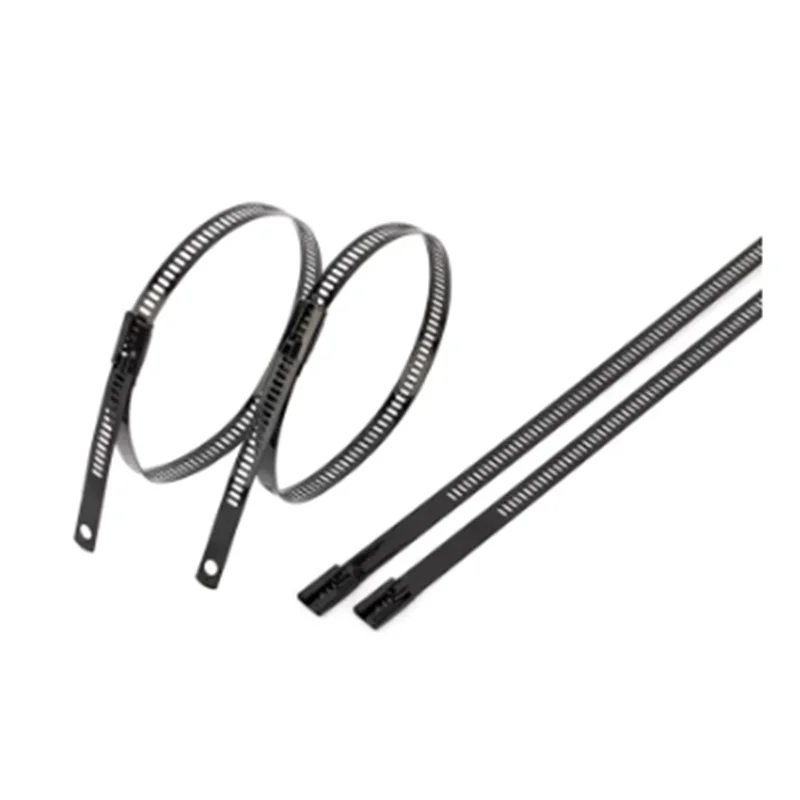
To address these challenges, many manufacturers offer epoxy coated stainless steel cable ties. The epoxy coating provides an additional protective barrier that significantly extends the service life of the cable ties while improving safety and overall performance.
What Is Epoxy Coating?
Epoxy coating is a durable protective layer applied to the surface of stainless steel cable ties through a specialized coating process. After curing, it forms a tough, uniform barrier that bonds tightly to the stainless steel substrate.
Unlike simple paint finishes, epoxy coatings are engineered to withstand harsh environmental conditions while maintaining flexibility, adhesion, and long-term protection.
Most industrial epoxy-coated cable ties use a polyester epoxy powder coating, which offers excellent resistance to:
Corrosion
UV radiation
Moisture
Chemicals
Abrasion
Mechanical impact
This protective layer works together with the stainless steel base to create a dual-defense system against environmental damage.
Why Stainless Steel Alone Isn’t Always Enough
Stainless steel naturally forms a passive chromium oxide layer that helps resist corrosion. While this protection is highly effective, certain environments can still accelerate deterioration.
Examples include:
Coastal areas with high salt content
Offshore oil platforms
Chemical processing plants
Wastewater treatment facilities
High-humidity industrial environments
Locations with constant vibration
In these conditions, even premium 304 or 316 stainless steel may experience surface wear, contamination, or localized corrosion over many years of service.
Adding an epoxy coating provides another level of protection that significantly increases the product’s lifespan.
How Epoxy Coating Extends Service Life
Creates an Additional Barrier Against Corrosion
The primary reason epoxy coating extends service life is that it isolates the stainless steel from direct contact with the surrounding environment.
The coating blocks exposure to:
Water
Oxygen
Salt
Industrial pollutants
Chemical splashes
Without continuous contact with these corrosive elements, the stainless steel remains protected for a much longer period.
This is particularly valuable in marine and offshore installations where salt spray constantly attacks exposed metal surfaces.
Prevents Surface Damage
During installation and long-term operation, cable ties may rub against:
Metal cable trays
Equipment housings
Pipes
Structural supports
Repeated friction can scratch uncoated stainless steel.
The epoxy coating acts as a protective cushion that absorbs minor abrasion, helping preserve the integrity of both the cable tie and the bundled cables.
Less surface damage means fewer opportunities for corrosion to begin.
Protects Cable Insulation
Bare stainless steel edges can gradually wear cable insulation due to vibration or movement.
Epoxy coating creates a smooth, non-metallic surface that minimizes:
Cable abrasion
Insulation wear
Surface scratching
Long-term vibration damage
Protecting the cables also reduces maintenance costs and extends the life of the entire cable management system.
Improves Chemical Resistance
Industrial environments often expose cable ties to chemicals such as:
Oils
Fuels
Solvents
Cleaning agents
Mild acids
Alkalis
Although stainless steel has good chemical resistance, prolonged exposure to aggressive substances may still affect its surface over time.
The epoxy coating acts as an additional chemical barrier, helping maintain the cable tie’s appearance and structural performance even in demanding environments.
Increases UV Resistance
Outdoor cable management systems experience continuous sunlight exposure.
Ultraviolet radiation can accelerate material degradation in many fastening products.
Epoxy coatings are specially formulated to resist UV aging, helping cable ties maintain their protective properties throughout years of outdoor service.
This makes epoxy-coated cable ties ideal for:
Solar power plants
Telecommunications towers
Highway infrastructure
Utility poles
Wind farms
Reduces Galvanic Corrosion
Galvanic corrosion occurs when two different metals come into direct contact in the presence of moisture.
The epoxy coating acts as an insulating layer that separates the stainless steel from other metals, significantly reducing the risk of galvanic corrosion.
This is especially important when fastening aluminum cable trays or galvanized steel structures.
Provides Electrical Insulation
Unlike bare stainless steel, epoxy-coated cable ties offer a degree of electrical insulation.
While the coating is not intended to replace dedicated electrical insulation products, it helps reduce accidental electrical contact between the cable tie and nearby conductive surfaces.
This added protection is beneficial in electrical installations where safety is a priority.
Minimizes Wear Caused by Vibration
Many industrial facilities experience continuous mechanical vibration.
Examples include:
Power plants
Railways
Manufacturing equipment
Offshore platforms
Mining machinery
The epoxy coating reduces friction between the cable tie and adjacent surfaces, helping prevent long-term wear caused by constant vibration.
This contributes to longer-lasting cable fastening performance.
Industries That Benefit Most from Epoxy Coated Cable Ties
Marine and Offshore
Constant exposure to saltwater makes corrosion protection essential.
Epoxy-coated stainless steel cable ties offer exceptional durability for:
Ships
Offshore platforms
Ports
Coastal infrastructure
Oil & Gas
Oil refineries and drilling facilities expose equipment to chemicals, heat, and vibration.
Epoxy coating helps maintain reliable cable management under these demanding conditions.
Renewable Energy
Solar farms and wind turbines require fastening systems capable of withstanding years of UV exposure and changing weather conditions.
Epoxy-coated cable ties are designed for long-term outdoor performance.
Telecommunications
Communication towers often remain in service for decades.
Using epoxy-coated cable ties reduces maintenance frequency and improves system reliability.
Chemical Processing
Chemical plants require fastening solutions that resist corrosive substances while maintaining mechanical strength.
The epoxy coating provides additional protection against chemical exposure.
Epoxy Coated vs Uncoated Stainless Steel Cable Ties
| Feature | Epoxy Coated | Uncoated Stainless Steel |
| Corrosion Resistance | Excellent | Very Good |
| UV Resistance | Excellent | Excellent |
| Cable Protection | Excellent | Moderate |
| Scratch Resistance | Excellent | Moderate |
| Chemical Resistance | Excellent | Good |
| Electrical Insulation | Yes | No |
| Galvanic Corrosion Protection | Excellent | Limited |
| Outdoor Service Life | Longer | Long |
Tips for Maximizing Service Life
Even the best cable ties perform better when installed correctly.
To maximize longevity:
Choose the appropriate stainless steel grade (304 or 316).
Use professional tensioning tools for proper installation.
Avoid over-tightening.
Select the correct cable tie size for the bundle.
Inspect installations periodically in highly corrosive environments.
Store unused cable ties in a clean, dry location before installation.
Proper installation and material selection can significantly increase the overall lifespan of the fastening system.
Why Choose Epoxy Coated Stainless Steel Cable Ties?
Compared with standard stainless steel cable ties, epoxy-coated versions provide:
Longer service life
Better corrosion resistance
Improved cable protection
Enhanced chemical resistance
Greater UV stability
Reduced maintenance costs
Better appearance after years of outdoor exposure
Higher reliability in harsh industrial environments
Although epoxy-coated cable ties may have a slightly higher initial cost, their extended lifespan and reduced maintenance requirements often result in a lower total cost of ownership.
Conclusion
Epoxy coating is much more than a cosmetic finish—it is a high-performance protective layer that significantly enhances the durability and reliability of stainless steel cable ties. By shielding the metal from corrosion, chemicals, UV radiation, abrasion, vibration, and galvanic reactions, epoxy-coated cable ties deliver longer service life and improved performance in the most demanding industrial environments.
Whether your project involves marine engineering, power distribution, telecommunications, renewable energy, or chemical processing, investing in epoxy-coated stainless steel cable ties can help reduce maintenance costs, improve system reliability, and ensure secure cable management for years to come.
FAQ
1. Why do stainless steel cable ties need an epoxy coating?
While stainless steel is naturally corrosion-resistant, an epoxy coating provides an extra layer of protection against moisture, chemicals, UV radiation, abrasion, and galvanic corrosion. This additional barrier helps extend the cable tie’s service life, especially in harsh industrial and outdoor environments.
2. Does epoxy coating affect the strength of stainless steel cable ties?
No. The epoxy coating does not reduce the mechanical strength of the stainless steel. Instead, it enhances durability by protecting the surface from wear, corrosion, and environmental damage while maintaining the cable tie’s high tensile strength.
3. Are epoxy-coated stainless steel cable ties suitable for outdoor use?
Yes. Epoxy-coated cable ties are specifically designed for outdoor applications. The coating offers excellent resistance to UV exposure, rain, humidity, salt spray, and temperature fluctuations, making them ideal for solar installations, telecommunications towers, marine facilities, and infrastructure projects.
4. Can epoxy-coated cable ties be used in chemical plants?
Yes. The epoxy coating provides additional resistance to oils, fuels, solvents, cleaning agents, and many industrial chemicals. This makes epoxy-coated stainless steel cable ties a reliable choice for chemical processing plants, refineries, and manufacturing facilities.
5. Are epoxy-coated cable ties electrically insulated?
The epoxy coating provides a non-conductive outer layer that helps reduce accidental metal-to-metal contact and protects cable insulation. However, they should not be considered a replacement for certified electrical insulation products where full electrical isolation is required.
6. How do epoxy-coated cable ties compare to uncoated stainless steel cable ties?
Epoxy-coated cable ties offer improved corrosion resistance, better protection for cable insulation, enhanced abrasion resistance, reduced risk of galvanic corrosion, and a longer service life in demanding environments. These advantages often result in lower maintenance costs over time.