



How Epoxy Coated Cable Ties Perform in Marine and Offshore Environments
Introduction
Marine and offshore environments are among the most demanding conditions for any industrial component. Constant exposure to saltwater, humidity, UV radiation, wind, and chemical corrosion can quickly degrade standard fastening materials. In these conditions, epoxy coated cable ties are widely used as a durable and corrosion-resistant cable management solution.
Why Marine and Offshore Environments Are So Challenging
Cable management systems on ships, offshore platforms, and coastal facilities must withstand:
Continuous salt spray and seawater exposure
High humidity and condensation
Strong UV radiation from sunlight
Temperature fluctuations
Mechanical vibration from engines and waves
Chemical exposure from fuels and cleaning agents
These factors accelerate corrosion and material fatigue, making standard nylon or metal ties unsuitable for long-term use.
What Makes Epoxy Coated Cable Ties Different?
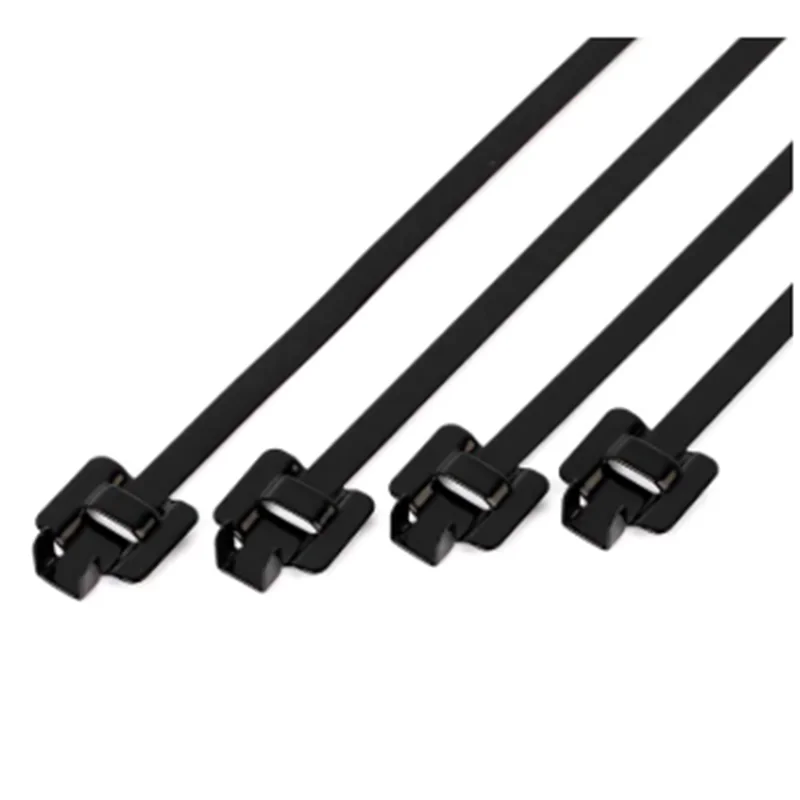
Epoxy coated cable ties are typically made from a metal core (often stainless steel) or reinforced material, covered with a protective epoxy resin layer.
Key structural advantages:
Metal strength for high tensile loads
Epoxy coating for chemical and corrosion resistance
Smooth surface to protect cable insulation
Enhanced durability in aggressive environments
The combination of mechanical strength + protective coating is what makes them ideal for offshore use.
Corrosion Resistance in Saltwater Conditions
Saltwater is highly corrosive due to chloride ions, which attack unprotected metals.
Epoxy coating performance benefits include:
Acts as a barrier between metal and salt exposure
Prevents oxidation and rust formation
Reduces electrochemical corrosion
Extends service life significantly compared to uncoated ties
Even in continuous salt spray zones, epoxy coated ties maintain structural integrity far longer than standard alternatives.
Mechanical Performance Under Offshore Stress
Offshore installations are exposed to constant motion and vibration.
Epoxy coated cable ties provide:
High tensile strength for heavy cable bundles
Stable locking performance under vibration
Resistance to loosening caused by movement
Long-term structural reliability
This makes them suitable for securing power cables, control wiring, and hydraulic lines on offshore platforms.
UV and Weather Resistance
On decks, offshore rigs, and coastal structures, UV exposure is intense.
Epoxy coating helps by:
Reducing UV degradation of the underlying metal
Maintaining coating integrity over long exposure periods
Preventing surface cracking and peeling in normal operating conditions
This ensures consistent performance in both sunny and stormy environments.
Chemical Resistance in Marine Applications
Marine environments often involve exposure to:
Fuel and oil residues
Cleaning solvents
Industrial chemicals
Epoxy coated cable ties resist many of these substances, helping maintain:
Structural strength
Surface protection
Long-term usability in maintenance cycles
Typical Applications in Marine and Offshore Industries
Epoxy coated cable ties are commonly used in:
Offshore oil and gas platforms
Shipbuilding and marine vessels
Coastal power plants
Subsea control systems (surface equipment)
Port infrastructure and dock facilities
They are especially useful for long-term fixed installations where maintenance access is limited.
Limitations to Consider
While highly durable, epoxy coated cable ties are not universal solutions:
Extremely high-impact mechanical damage may chip coating
Very high-temperature environments may reduce coating performance
Heavy-duty applications may still require full stainless steel systems
Proper selection is essential based on project conditions.
Conclusion
Epoxy coated cable ties offer a strong balance of corrosion resistance, mechanical strength, and environmental durability, making them highly effective in marine and offshore environments. Their ability to withstand saltwater exposure, UV radiation, and constant vibration makes them a reliable choice for critical cable management systems.
For offshore engineers and marine installers, they provide a practical solution that significantly extends service life while maintaining safety and performance.
FAQ
1. Why are epoxy coated cable ties suitable for marine environments?
They are suitable because the epoxy coating forms a protective barrier against saltwater, humidity, and corrosion, while the metal core provides high tensile strength for secure cable bundling.
2. How do epoxy coated cable ties resist saltwater corrosion?
The epoxy layer prevents direct contact between metal and seawater. This blocks chloride attack and oxidation, significantly slowing down corrosion compared to uncoated metal ties.
3. Can epoxy coated cable ties be used on offshore oil platforms?
Yes. They are commonly used on offshore platforms for securing power cables, control wiring, and hydraulic lines due to their durability and resistance to harsh environmental conditions.
4. Are epoxy coated cable ties better than stainless steel cable ties?
It depends on the application. Epoxy coated ties offer strong corrosion resistance and cable protection, while stainless steel ties provide maximum mechanical strength for extreme-duty environments.
5. Do epoxy coated cable ties work well under constant vibration?
Yes. They maintain stable locking performance under vibration, making them suitable for ships, offshore rigs, and marine engine environments.
6. What is the main limitation of epoxy coated cable ties?
The epoxy coating can be damaged by heavy mechanical impact or sharp abrasion, which may expose the underlying metal to corrosion if not properly maintained.
7. Can they withstand UV exposure in offshore conditions?
Yes. Epoxy coating improves UV resistance, helping the cable ties maintain durability in long-term outdoor and marine exposure.
8. Are epoxy coated cable ties reusable?
Most epoxy coated cable ties are designed for permanent or semi-permanent installations and are not intended for repeated reuse like releasable plastic cable ties.