



Protecting Cables from Salt Spray Damage with Epoxy Coated Cable Ties
Introduction
In coastal regions, offshore facilities, marine environments, and industrial sites exposed to salty air, cable management systems face a constant threat: salt spray corrosion. Over time, salt particles carried by wind and moisture can attack metal components, weaken cable fastening systems, and increase maintenance costs.
To ensure long-term cable security and system reliability, many engineers and contractors choose epoxy coated cable ties. Combining the strength of stainless steel with an additional protective coating, these cable ties provide enhanced resistance against harsh environmental conditions where standard fastening solutions may fail.
Understanding Salt Spray Corrosion
Salt spray consists of tiny salt particles suspended in moisture. These particles settle on surfaces and create an electrolyte layer that accelerates corrosion.
Common environments affected by salt spray include:
Coastal infrastructure
Offshore oil and gas platforms
Marine vessels and ports
Wastewater treatment facilities
Chemical processing plants
Bridges and transportation systems near coastlines
Even stainless steel components can experience accelerated corrosion when continuously exposed to salt-laden environments, especially if surface protection is insufficient.
How Salt Spray Damages Cable Management Systems
When cable fastening systems are exposed to salt spray, several problems can occur:
Corrosion of Metal Components
Salt accelerates oxidation, causing metal fasteners and supports to deteriorate over time.
Reduced Mechanical Strength
Corroded cable ties may lose tensile strength, increasing the risk of cable movement or detachment.
Damage to Cable Jackets
Rough or corroded fastening materials can create abrasion points that damage cable insulation.
Increased Maintenance Requirements
Frequent inspections, repairs, and replacements become necessary when cable management components deteriorate prematurely.
System Reliability Risks
Loose or damaged cables can lead to operational disruptions, safety concerns, and costly downtime.
What Are Epoxy Coated Cable Ties?
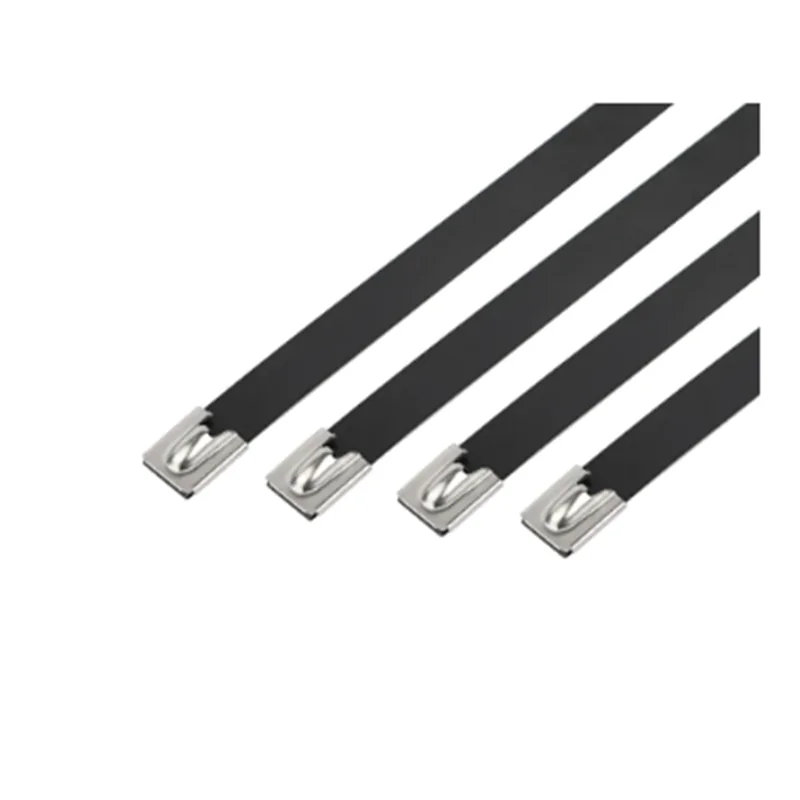
Epoxy coated cable ties are stainless steel cable ties covered with a protective epoxy polyester coating.
The construction typically includes:
High-strength stainless steel core
Durable epoxy coating
Self-locking or ball-lock mechanism
Smooth surface for cable protection
The coating acts as a barrier between the metal and the surrounding environment, significantly improving resistance to corrosion and environmental damage.
How Epoxy Coated Cable Ties Protect Against Salt Spray
Enhanced Corrosion Resistance
The epoxy coating prevents direct contact between salt-laden moisture and the stainless steel surface.
This additional protective layer helps:
Minimize oxidation
Reduce pitting corrosion
Extend service life
Maintain structural integrity
As a result, cable ties remain reliable even in aggressive marine environments.
Protection of Cable Insulation
Unlike uncoated metal ties, epoxy coated cable ties provide a smoother surface that reduces friction against cable jackets.
Benefits include:
Less abrasion
Reduced insulation wear
Improved cable longevity
Better protection for sensitive wiring
This is especially important in installations subject to vibration or movement.
Resistance to UV and Weather Exposure
Many coastal installations experience not only salt spray but also intense sunlight, rain, and temperature fluctuations.
Epoxy coatings help cable ties resist:
UV degradation
Moisture penetration
Temperature cycling
Environmental aging
This makes them suitable for long-term outdoor use.
Longer Service Life
By reducing corrosion-related deterioration, epoxy coated cable ties can remain functional for many years without replacement.
Longer service life means:
Lower maintenance costs
Reduced labor requirements
Fewer shutdowns
Better return on investment
Industries That Benefit from Epoxy Coated Cable Ties
Marine and Shipbuilding
Ships, ports, and marine equipment operate in constant contact with saltwater and sea air, making corrosion protection essential.
Offshore Oil and Gas Platforms
Offshore structures require durable fastening solutions capable of withstanding extreme environmental conditions.
Renewable Energy Projects
Coastal solar farms and offshore wind installations rely on dependable cable management systems for uninterrupted performance.
Telecommunications Infrastructure
Communication towers near coastlines need corrosion-resistant cable ties to maintain network reliability.
Transportation and Bridges
Roadway and bridge electrical systems exposed to salt spray benefit from enhanced protection against corrosion.
Best Practices for Coastal Cable Installations
To maximize protection against salt spray damage, consider the following recommendations:
Select High-Quality Stainless Steel Grades
Choose cable ties manufactured from corrosion-resistant stainless steel such as:
SS304 for moderate environments
SS316 for highly corrosive marine conditions
Match Tie Strength to Application Requirements
Ensure cable ties provide adequate tensile strength for cable size and environmental loads.
Inspect Installations Periodically
Regular inspections help identify wear, physical damage, or environmental stress before failures occur.
Use Compatible Mounting Accessories
Combine epoxy coated cable ties with corrosion-resistant brackets, clamps, and mounting hardware for complete system protection.
Follow Proper Installation Procedures
Avoid overtightening and use appropriate installation tools to ensure secure and consistent fastening.
Comparing Epoxy Coated and Standard Stainless Steel Cable Ties
| Feature | Standard Stainless Steel Cable Ties | Epoxy Coated Cable Ties |
| Corrosion Resistance | Good | Excellent |
| Salt Spray Protection | Moderate | Superior |
| Cable Jacket Protection | Limited | Enhanced |
| Outdoor Durability | Good | Excellent |
| UV Resistance | Moderate | High |
| Maintenance Requirements | Higher | Lower |
| Service Life in Coastal Areas | Shorter | Longer |
For installations exposed to continuous salt spray, epoxy coated cable ties often provide significantly better long-term performance.
Conclusion
Salt spray is one of the most challenging environmental factors affecting cable management systems in coastal and marine applications. Without adequate protection, corrosion can compromise fastening integrity, damage cables, and increase maintenance costs.
Epoxy coated cable ties offer an effective solution by combining the strength of stainless steel with a protective coating that resists salt spray, moisture, UV exposure, and environmental wear. Their enhanced durability, cable protection capabilities, and long service life make them an ideal choice for marine, offshore, utility, telecommunications, and industrial installations.
For projects where reliability and corrosion resistance are critical, investing in high-quality epoxy coated cable ties can help ensure secure cable management and lower lifecycle costs.
FAQ
Are epoxy coated cable ties better than standard stainless steel cable ties in coastal environments?
Yes. The epoxy coating provides an additional protective barrier against salt spray and moisture, making them more resistant to corrosion than uncoated stainless steel cable ties.
Can epoxy coated cable ties be used outdoors?
Absolutely. They are designed to withstand outdoor conditions, including UV exposure, rain, humidity, and temperature fluctuations.
Which stainless steel grade is best for marine applications?
SS316 stainless steel is generally preferred for marine and coastal environments because it offers superior resistance to chloride-induced corrosion.
Do epoxy coated cable ties protect cable insulation?
Yes. The smooth epoxy coating reduces friction and minimizes the risk of damaging cable jackets during installation and operation.
How long do epoxy coated cable ties last in salt spray environments?
Service life depends on environmental conditions and material quality, but epoxy coated cable ties typically last significantly longer than uncoated alternatives in corrosive coastal applications.